
08/21/2026 · maternity hospital
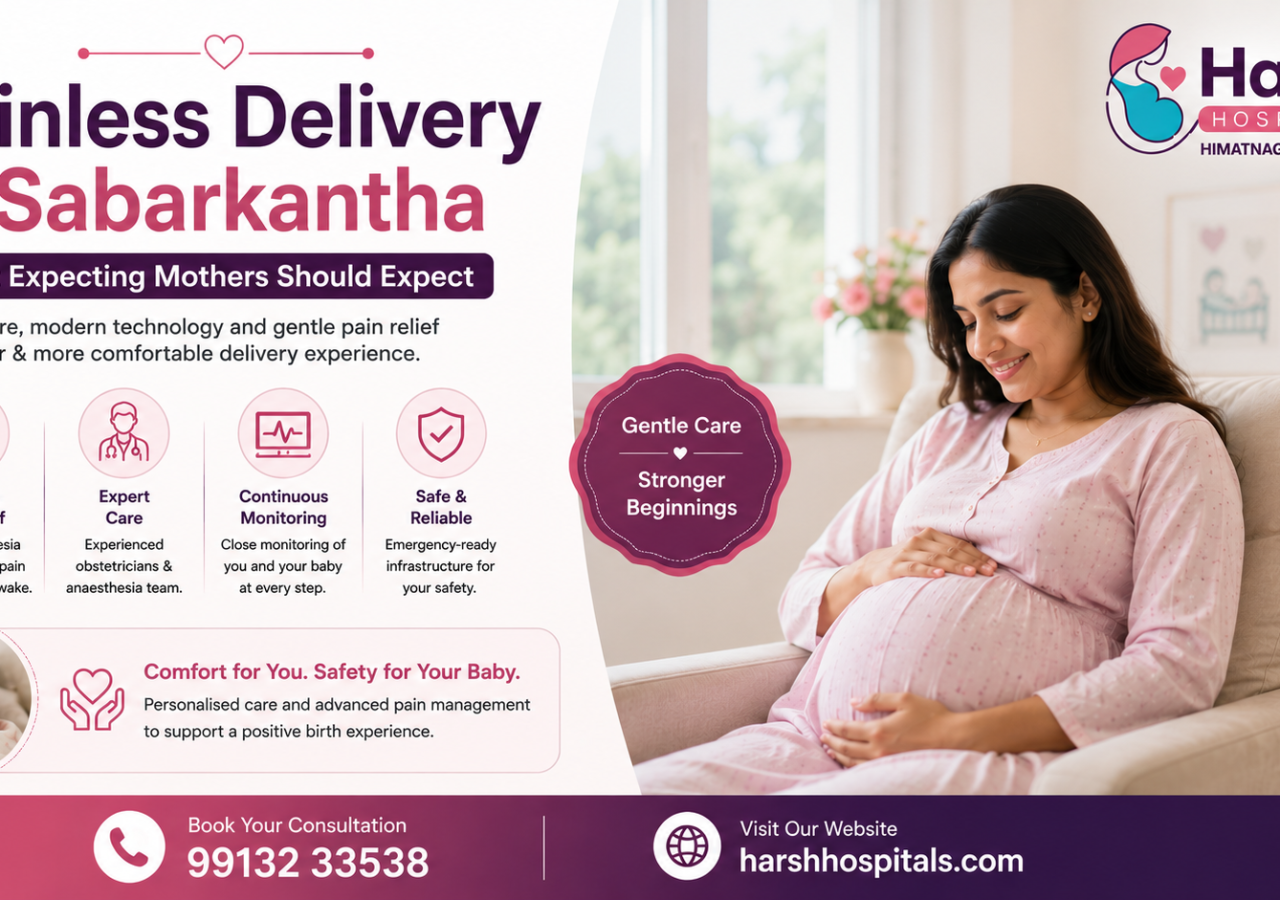
Pregnancy is an important stage of life, and concerns about labour pain are common among expecting mothers. Painless delivery in sabarkantha is a medically supervised option that can be discussed with an obstetrician during pregnancy. It generally refers to labour pain management, most commonly through epidural analgesia. The aim is to reduce pain while keeping the mother awake and able to participate in childbirth. Its suitability depends on maternal health, pregnancy condition, labour progress, and professional assessment.
What Is Painless Delivery?
Painless delivery is a commonly used term for effective pain management during labour. It does not necessarily mean that the mother feels absolutely no sensation. Epidural analgesia reduces pain signals from the lower part of the body, although pressure and contractions may still be felt.
For women considering painless delivery in sabarkantha, understanding the procedure, benefits, limitations, and possible side effects is important. These factors should be discussed during antenatal consultations so mothers can make informed decisions.
How Does an Epidural Work?
An epidural is administered by a trained anaesthetist. The lower back is cleaned and numbed with local anaesthetic. A thin catheter is positioned in the epidural space, allowing medication to reduce pain transmission during labour.
The mother generally remains awake. Her blood pressure and the baby’s condition are monitored while medication is administered and adjusted according to her response.
Does It Mean a Normal Delivery?
Not necessarily. A painless normal delivery is possible when labour progresses normally and there is no medical reason for operative delivery. An epidural does not automatically determine whether a mother will have a vaginal or caesarean birth.
The final delivery method depends on cervical dilation, fetal position, fetal wellbeing, maternal health, and labour progression. Therefore, painless delivery in sabarkantha should be viewed as a pain-management option rather than a guarantee of vaginal birth.
Who Can Consider Painless Labour?
Many healthy pregnant women may be candidates for epidural pain relief, but eligibility is assessed individually. The obstetrician and anaesthetist may review medical history, medications, pregnancy complications, allergies, and blood-clotting status.
When May It Be Considered?
Women may discuss painless delivery in sabarkantha when they are concerned about labour pain, expect prolonged labour, or want stronger pain relief when other methods are insufficient.
Pain management may be discussed when:
- Labour becomes prolonged or particularly painful.
- The mother has significant anxiety about labour pain.
- Other pain-relief methods do not provide enough comfort.
- Epidural analgesia is included in the mother’s birth preferences.
An epidural may not be suitable for everyone. Certain clotting problems, infections, medications, or an urgent delivery can affect eligibility.
Why Is Individual Assessment Important?
Every pregnancy is different. A woman with an uncomplicated pregnancy may have different requirements from someone who needs additional monitoring.
For this reason, women planning painless delivery in sabarkantha should discuss their medical history with their obstetrician instead of relying only on general online information.
What Happens During an Epidural Delivery?
Understanding the procedure can help expecting mothers feel more prepared. The medical team explains each stage and monitors the mother and baby throughout labour.
Before the Procedure
The mother’s vital signs are checked, and intravenous access may be established. She is positioned carefully, usually sitting or lying on her side, so the anaesthetist can access the lower back.
The skin is cleaned and local anaesthetic is used to reduce discomfort during catheter placement.
During the Procedure
A fine needle guides the epidural catheter into the appropriate space. The needle is removed while the catheter remains in place. Medication is then administered through the catheter.
The mother stays awake and can communicate with the healthcare team. Blood pressure and the baby’s heart rate are monitored during the procedure.
During the Rest of Labour
Once the epidural starts working, contractions may become considerably more manageable. Depending on the medication and dose, the legs may feel heavy or weaker. Temporary difficulty passing urine can also occur.
The medical team continues monitoring labour progress and fetal wellbeing. For mothers choosing painless delivery in sabarkantha, regular communication with the healthcare team remains important.
What Are the Benefits of Epidural Pain Relief?
Epidural analgesia can provide substantial pain relief for suitable patients. It may be particularly useful when labour becomes prolonged or when other pain-management methods do not provide enough comfort.
Key Benefits
Potential benefits include:
- Strong pain relief during labour.
- The mother generally remains awake and responsive.
- Medication can be adjusted according to individual needs.
- It can provide better comfort during prolonged labour.
The purpose of painless delivery in sabarkantha is therefore effective and controlled pain management rather than necessarily removing every physical sensation.
Are There Side Effects?
Like every medical procedure, epidural analgesia has possible side effects. Most are temporary and can be managed by the medical team.
Common Side Effects
Possible effects include:
- Temporary low blood pressure.
- Heavy or weaker-feeling legs.
- Difficulty passing urine.
- Itching or nausea.
- Temporary soreness around the insertion area.
- Headache in some cases.
Blood pressure can fall after an epidural, which is why monitoring is important. Temporary bladder problems can also occur.
Can an Epidural Affect Labour?
An epidural may sometimes affect the second stage of labour, and the mother may have less sensation while pushing. In some circumstances, additional assistance may be required.
This does not mean an epidural automatically results in a caesarean delivery. The obstetric team assesses labour progression and the baby’s condition before recommending further intervention. Mothers considering painless delivery in sabarkantha should understand that clinical safety takes priority over a fixed birth plan.
Does an Epidural Cause Back Pain After Delivery?
Some women may experience temporary tenderness around the epidural insertion area. However, epidural analgesia is not generally considered a cause of long-term backache.
Pregnancy and childbirth themselves can contribute to postpartum back discomfort because of physical and postural changes. Women considering painless delivery in sabarkantha should understand that postpartum pain can have several causes.
When Should You Seek Medical Attention?
Severe or worsening back pain, significant weakness or numbness, bladder or bowel problems, fever, or severe headache should not simply be attributed to an epidural. Such symptoms require prompt medical assessment.
Painless Delivery Compared With Other Pain-Relief Options
Epidural analgesia is not the only method of managing labour discomfort. Depending on the hospital and the mother’s condition, options may include breathing techniques, relaxation, movement, gas and air, or injectable medicines.
| Pain-relief method | Main purpose | Key consideration |
| Epidural | Strong labour pain relief | Requires anaesthesia support |
| Breathing and relaxation | Helps manage contractions | Does not usually eliminate pain |
| Movement and positioning | Improves comfort | Depends on labour condition |
| Gas and air | Helps manage contractions | May cause lightheadedness |
| Injectable medicines | Reduces pain | Timing is important |
For women considering painless delivery in sabarkantha, the most suitable method should be selected after discussing individual needs and medical circumstances with the maternity team.
How Should You Prepare?
The best time to discuss labour pain management is during antenatal care rather than waiting until active labour. Early planning allows the doctor to understand your preferences and identify factors that could affect epidural eligibility.
Questions to Ask Your Doctor
Before finalising your birth preferences, ask:
- Is an epidural suitable for my pregnancy?
- When can it be administered?
- Is an anaesthetist available when required?
- What monitoring will be needed?
- What alternatives are available?
- What should I expect after the procedure?
These questions can help create a more informed birth plan.
Keep Your Birth Plan Flexible
A birth plan communicates preferences rather than guaranteeing a particular outcome. Labour can change quickly, and the medical team may recommend another approach if the health of the mother or baby requires it.
Therefore, painless delivery in sabarkantha should be considered one part of comprehensive maternity care.
Choosing a Painless Delivery Hospital in Sabarkantha
Choosing a painless delivery hospital in Sabarkantha involves more than checking whether epidural delivery is advertised. Expecting mothers should consider obstetric care, anaesthesia support, monitoring, emergency facilities, and communication with the healthcare team.
What Should You Look For?
Important factors include:
- Experienced obstetric and anaesthesia professionals.
- Appropriate maternal and fetal monitoring.
- Clear counselling about epidural benefits and risks.
- Ability to manage unexpected labour complications.
- Appropriate newborn and emergency support.
A maternity hospital Sabarkantha families choose should also provide antenatal counselling about delivery choices and pain-management options.
Why Anaesthesia Support Matters
An epidural requires trained anaesthesia support because an anaesthetist administers and monitors the procedure.
Women interested in painless delivery in sabarkantha should ask about anaesthetist availability, monitoring facilities, and the hospital’s process for requesting epidural analgesia.
When Should You Discuss Epidural Delivery?
It is advisable to discuss epidural delivery during pregnancy, particularly if you already know that you want strong pain relief. Antenatal consultation allows the medical team to review your history and explain suitable options.
Why Early Discussion Helps
Labour can progress at different rates. Discussing your preferences early allows the team to explain the procedure, potential side effects, monitoring requirements, and alternatives.
For mothers planning painless delivery in sabarkantha, early consultation can clarify what happens if labour progresses rapidly or an epidural becomes medically unsuitable.
When May Painless Delivery Not Be Appropriate?
Not every mother can receive an epidural. The decision may be affected by blood-clotting problems, certain medicines, infection, or the urgency of delivery.
Medical Assessment Comes First
A mother should not assume she is automatically eligible because her pregnancy has been uncomplicated. The anaesthetist and obstetrician consider her current condition, medications, labour stage, and baby’s wellbeing.
This assessment helps make painless delivery in sabarkantha appropriate for the individual mother.
Plan Your Delivery With Harsh Hospital
If you are considering painless delivery in sabarkantha, discussing your options with an experienced maternity team can help you make an informed decision. Epidural analgesia can provide strong labour pain relief for suitable women, but it should always be considered within a complete birth plan.
At Harsh Hospital, expecting mothers can discuss pregnancy, delivery preferences, pain-management options, and individual concerns with the maternity care team.
Planning your delivery and want to know whether epidural pain relief is suitable for you? Book an antenatal consultation with Harsh Hospital to discuss your pregnancy and available labour pain-management options.
Book an Appointment / Explore Painless Delivery at Harsh Hospital
Conclusion
Painless delivery in sabarkantha can be an effective option for women seeking better pain management during labour. Epidural analgesia can significantly reduce labour pain while allowing the mother to remain awake and involved in childbirth. However, it has eligibility requirements, possible side effects, and monitoring needs.
Expecting mothers should discuss their preferences during antenatal care, understand available pain-relief choices, and select maternity care with appropriate obstetric and anaesthesia support. With professional guidance and a flexible birth plan, mothers can approach labour with greater confidence while keeping maternal and newborn safety as the priority.
Frequently Asked Questions
1. What is painless delivery in Sabarkantha?
Painless delivery in sabarkantha generally refers to medically supervised labour pain management, commonly through an epidural. It aims to reduce labour pain while keeping the mother awake.
2. Is painless delivery the same as painless normal delivery?
Painless normal delivery means vaginal birth with effective pain management. An epidural may support this type of birth, but it cannot guarantee vaginal delivery.
3. Is epidural delivery safe?
Epidural analgesia is generally considered safe when administered by trained professionals with appropriate monitoring. Temporary side effects can occur, while serious complications are uncommon.
4. Can every pregnant woman have an epidural?
No. Eligibility depends on medical history, medications, blood-clotting status, infection risk, and labour circumstances. An anaesthetist determines whether it is appropriate.
5. Does an epidural cause permanent back pain?
Epidural analgesia is not generally considered a cause of long-term backache. Temporary soreness can occur, while postpartum back pain may have other causes.
6. What should I look for in a painless delivery hospital in Sabarkantha?
Look for qualified obstetric and anaesthesia support, appropriate monitoring, emergency maternity services, and clear counselling about epidural and alternative pain-relief options.
7. Does an epidural guarantee a normal delivery?
No. An epidural is a pain-relief method, not a guarantee of vaginal birth. The final delivery method depends on labour progress, maternal health, fetal wellbeing, and other clinical factors.