
Total Laparoscopic Hysterectomy at Harsh Hospital
When the uterus needs to be removed, keyhole surgery offers smaller cuts, less pain and a faster return to everyday life, performed with precision and care in Himatnagar.
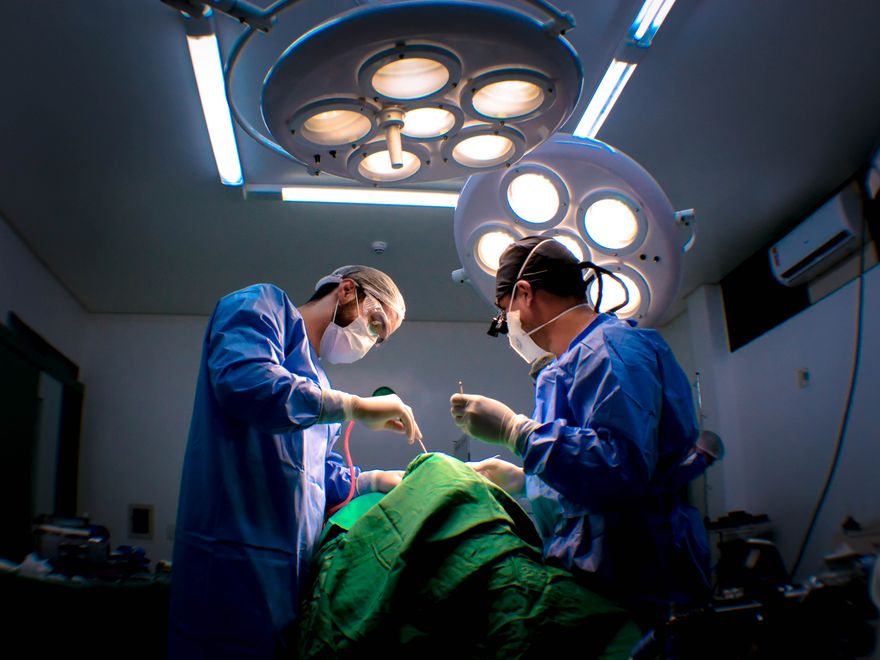
A hysterectomy is sometimes the best way to relieve long-standing problems such as large fibroids, heavy bleeding or persistent pain. A total laparoscopic hysterectomy (TLH) removes the uterus through a few tiny incisions instead of one large cut. As an Advanced Laparoscopic Surgeon, Dr. Hitesh Patel uses this minimally-invasive technique to help most women recover more comfortably and go home sooner. We take time to explain why surgery is being recommended, what alternatives exist, and exactly what to expect, so you feel confident, not anxious.
When It May Be Recommended
Large or Multiple Fibroids
When fibroids cause pressure, heavy bleeding or pain and other treatments have not helped.
Heavy Menstrual Bleeding
Persistent heavy or prolonged bleeding that affects daily life and does not settle with medication.
Adenomyosis
Painful, enlarged uterus from tissue growing into the muscle wall.
Uterine Prolapse
When the uterus has descended and is causing discomfort or pressure.
Chronic Pelvic Pain
Long-standing pain linked to the uterus where conservative care has not worked.
Pre-cancerous Changes
Certain abnormal changes of the uterine lining that need definitive treatment.
Our Approach
- Detailed Evaluation, a full assessment, scans and a frank discussion of whether surgery is truly the best option for you.
- Pre-operative Planning, fitness checks, clear instructions and answers to every question before the day of surgery.
- Keyhole Surgery, the uterus is removed through small incisions under safe anaesthesia, usually with minimal blood loss.
- Comfortable Recovery, gentle pain control and early movement, with most women going home within a short stay.
- Follow-up Care, wound checks, recovery guidance and ongoing support as you return to normal life.
Why Patients Trust Harsh Hospital
Minimally-invasive technique
Years of surgical care
Recovery, smaller scars
Surgery only when needed
What to Expect
Compared with open surgery, a laparoscopic hysterectomy usually means less pain, a shorter hospital stay and a quicker return to normal activities. Before surgery we make sure you understand the plan; afterwards we guide your recovery step by step.
- Only a few small incisions instead of one large cut.
- A short, planned hospital stay in most cases.
- Clear, written do’s and don’ts for your recovery weeks at home.
- A direct line to our team if anything worries you afterwards.
Frequently Asked Questions
Is laparoscopic hysterectomy safe?
It is a well-established, widely-performed procedure. As with any surgery there are risks, which we explain fully beforehand. The keyhole approach is chosen specifically because it tends to be gentler on the body.
How long is the recovery?
Many women feel noticeably better within a couple of weeks and gradually return to full activity over a few weeks. We give you a personalised timeline based on your work and home life.
Will my hormones change?
If only the uterus is removed and the ovaries are kept, your hormones usually continue as before and you will simply stop having periods. If ovaries are involved, we discuss this with you in detail in advance.
Are there alternatives to a hysterectomy?
Often, yes, depending on your diagnosis, options such as medication, hormonal treatment or less extensive surgery may be possible. We always discuss these before recommending a hysterectomy.
Will I have a large scar?
No. The procedure uses a few small incisions, so scarring is minimal compared with traditional open surgery.