07/22/2026 · women's hospital
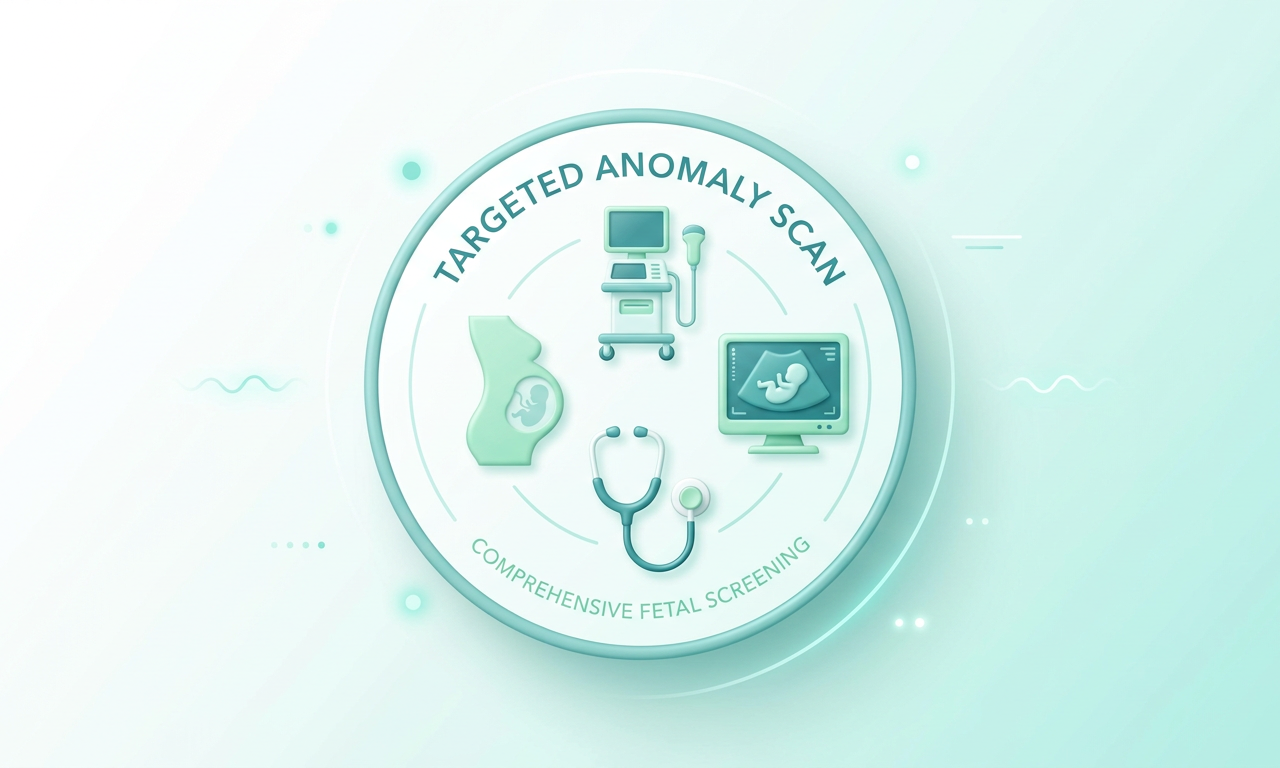
Pregnancy comes with a long list of tests, and it is easy to feel confused about which ones truly matter. One scan, however, deserves your full attention: the targeted anomaly scan . If you are expecting a baby in Himatnagar, this detailed ultrasound between 18 and 22 weeks gives your doctor the clearest possible picture of your baby’s growth. At Harsh Hospital, our pregnancy care team includes this scan as a standard part of every mother’s checkup schedule, so you get expert answers close to home. This guide explains what the scan involves, why it matters, what it can and cannot detect, and how to prepare for it, all in simple language.
What Is a Targeted Anomaly Scan?
A targeted anomaly scan is a detailed ultrasound examination done in the second trimester, usually between the 18th and 22nd week of pregnancy. Some doctors call it a level II scan or a TIFFA scan (Targeted Imaging for Fetal Anomalies). Unlike the quick dating scan done early in pregnancy, this one takes 30 to 45 minutes because the sonologist studies your baby from head to toe.
During the scan, the doctor examines the brain, face, spine, heart, stomach, kidneys, arms, and legs one by one. They also measure the baby’s head, abdomen, and thigh bone to confirm that growth matches the pregnancy stage. In addition, the scan checks the position of the placenta, the amount of amniotic fluid, and the blood flow through the umbilical cord. Because so much is reviewed in a single sitting, this scan has become the backbone of modern prenatal care.
Why the Targeted Anomaly Scan Matters in Prenatal Care
Most babies develop normally, and for most mothers this scan simply brings reassurance. So why is it considered essential? The answer is timing. The 18 to 22 week window is the earliest stage at which the baby’s organs are large enough to examine clearly, yet early enough for doctors to act if something needs attention.
For example, if the scan shows a heart condition, your doctors can plan for delivery at a hospital equipped to treat the newborn immediately. If the placenta is lying low, your maternity care team can watch it through later scans and plan the safest mode of delivery. Early information leads to better decisions, and better decisions lead to safer outcomes for both mother and baby. As a result, doctors across the world recommend this scan for every pregnancy, not only high-risk ones.
When Should You Get the Scan?
The ideal window is between 18 and 22 weeks of pregnancy. Before 18 weeks, some organs, especially the heart, are too small to assess properly. After 24 weeks, the baby’s position and reduced fluid can hide certain structures from view.
So mark this window on your calendar early. When you visit Harsh Hospital for your regular pregnancy care checkups, your doctor will tell you the exact week to schedule it based on your dates. Women with diabetes, thyroid problems, a history of pregnancy loss, or a family history of birth defects may be asked to come at the earlier end of the window, and sometimes a follow-up scan is added later.
What Happens During the Targeted Anomaly Scan: Step by Step
Many mothers feel nervous before this appointment, mostly because they do not know what to expect. Here is how a typical scan goes:
Step 1: Check-in and positioning. You lie comfortably on the examination table. A water-based gel is applied on your abdomen. The gel feels cool but causes no harm to you or the baby.
Step 2: The systematic survey. The sonologist moves the probe slowly across your belly and examines each organ in a fixed order: skull and brain, face and lips, spine, chest and heart, stomach and bowel, kidneys and bladder, and finally the limbs, fingers, and toes.
Step 3: Measurements. Key measurements are taken and compared with standard growth charts for your pregnancy week.
Step 4: Placenta, fluid, and cord. The placenta’s position, the amniotic fluid level, and the umbilical cord vessels are checked.
Step 5: Report and discussion. Your doctor explains the findings to you the same day and answers your questions. The whole process is painless, and ultrasound uses sound waves, not radiation, so it is completely safe for the baby.
What Can a Targeted Anomaly Scan Detect?
This scan is designed to pick up structural differences in the baby’s body. The commonly assessed conditions include:
Brain and spine issues such as spina bifida and hydrocephalus; facial differences such as cleft lip; heart defects, which are among the most common birth conditions; abdominal wall problems; kidney and urinary tract abnormalities; and limb differences such as clubfoot. The scan also flags soft markers, which are small findings that may suggest a higher chance of chromosomal conditions like Down syndrome and can guide further testing.
Detection rates vary by condition. Major brain and spine problems are picked up in a large majority of cases, while some heart defects are harder to see. This is why the skill of the sonologist and the quality of the machine both matter so much.
What the Scan Cannot Tell You: An Honest View
No test in medicine is perfect, and it is only fair that you know the limits. A normal anomaly scan greatly reduces worry, but it cannot guarantee a perfect baby. Some conditions develop later in pregnancy. Others, such as autism, intellectual differences, or certain genetic disorders, cause no structural change that an ultrasound can see.
Also, the baby’s position, the mother’s body type, and lower fluid levels can occasionally limit the view. If a structure cannot be seen clearly, your doctor will simply call you back after a week or two rather than guess. Honest reporting like this is a sign of good practice, not a cause for panic. Finally, remember that in India, revealing the baby’s sex is illegal under the PCPNDT Act, so no ethical centre will disclose it.
How to Prepare for Your Scan
Preparation is refreshingly simple. You do not need to fast, and unlike early pregnancy scans, you usually do not need a full bladder. Wear a two-piece outfit so only your abdomen needs to be exposed. Carry your previous scan reports and your prenatal care file, because comparing older measurements helps the doctor track growth accurately.
Eat a light meal before you come; some mothers find that the baby moves more after food, which can actually help the scan. Bring your husband or a family member along if you wish. Hearing the heartbeat and watching the baby move on screen is a moment most families love to share.
What If the Scan Finds a Problem?
First, take a breath. An unusual finding is not an automatic diagnosis. Many soft markers disappear on follow-up scans, and many findings turn out to be minor variations that need no treatment at all.
If something significant is confirmed, your doctor will explain the condition, the options, and the next steps clearly. You may be offered further tests, a repeat scan, or a fetal echocardiography for detailed heart assessment. Pregnancies that need closer monitoring are moved into our dedicated high-risk pregnancy care program, where visits are more frequent and delivery planning is done well in advance. Because everything happens under one roof at Harsh Hospital, you are never left searching for the next opinion in another city.
How the Scan Shapes Your Delivery Plan
The anomaly scan does more than examine the baby; it quietly shapes the rest of your pregnancy journey. A normal report with a well-placed placenta keeps you on track for a normal delivery when the time comes. In fact, most mothers with reassuring scans go on to deliver naturally, and many choose our painless delivery option using epidural anaesthesia for a calm birth experience.
On the other hand, findings like a low-lying placenta may point toward a planned caesarean for safety. Either way, knowing early lets you and your maternity care team prepare emotionally and practically. Whether your path turns out to be a normal delivery, a painless delivery with epidural support, or a planned surgery, the preparation begins with this one scan. There are no last-minute surprises, and that peace of mind is worth a great deal to every family.
Why Choose Harsh Hospital, Himatnagar for Your Anomaly Scan
Quality matters more in this scan than in almost any other pregnancy test. At Harsh Hospital, scans are performed on advanced ultrasound machines and reported by experienced doctors who handle hundreds of pregnancies every year. Because we provide complete maternity care, from preconception advice to normal delivery, painless delivery, and newborn support, your scan report never sits in isolation. It flows directly into your ongoing pregnancy care plan.
Ready to schedule your scan? Book an appointment with our team today, and we will help you fix a date within your ideal 18 to 22 week window.
Frequently Asked Questions About the Targeted Anomaly Scan
Is the targeted anomaly scan safe for my baby?
Yes, the scan is completely safe. It uses high-frequency sound waves, not radiation, and decades of research have found no harm to babies from routine ultrasound. You can undergo it without any worry.
How long does the anomaly scan take?
Most scans take 30 to 45 minutes. If the baby is lying in an awkward position, the sonologist may ask you to walk around for a few minutes and return, which can extend the visit slightly.
Can I eat before the targeted anomaly scan?
Yes, you can eat normally before this scan. A light meal is actually helpful because it often makes the baby more active, which gives the doctor better views of moving limbs and the heart.
What happens if my baby is not in a good position during the scan?
The doctor will ask you to change sides, walk for a short while, or come back after some time. If a structure still cannot be seen, a repeat scan is booked after one or two weeks. This is routine and not a sign of any problem.
Does a normal anomaly scan mean my baby is definitely healthy?
A normal scan is very reassuring, but no scan can rule out every condition. It checks the baby’s structure, not genetic or developmental conditions that leave no visible sign. Your doctor will combine the scan with blood tests and regular checkups for the fullest picture.
Will the doctor tell me my baby’s gender during the scan?
No. Revealing the sex of the baby is illegal in India under the PCPNDT Act, and Harsh Hospital follows the law strictly. The scan focuses only on your baby’s health and development.
Do I need a full bladder for the anomaly scan?
Usually no. By 18 to 22 weeks, the amniotic fluid around the baby provides a clear window on its own. Your doctor will tell you in advance if any special preparation is needed in your case.
Final Thoughts
The targeted anomaly scan is a small window of time that delivers a lifetime of value. It confirms healthy growth for most families, and for the few who need extra support, it opens the door to timely care. So do not skip it, and do not delay it beyond 22 weeks. If you are pregnant and in or around Himatnagar, talk to our team at Harsh Hospital, get your scan scheduled at the right week, and walk into the rest of your pregnancy with clarity and confidence.