
August 28, 2026 · maternity hospital
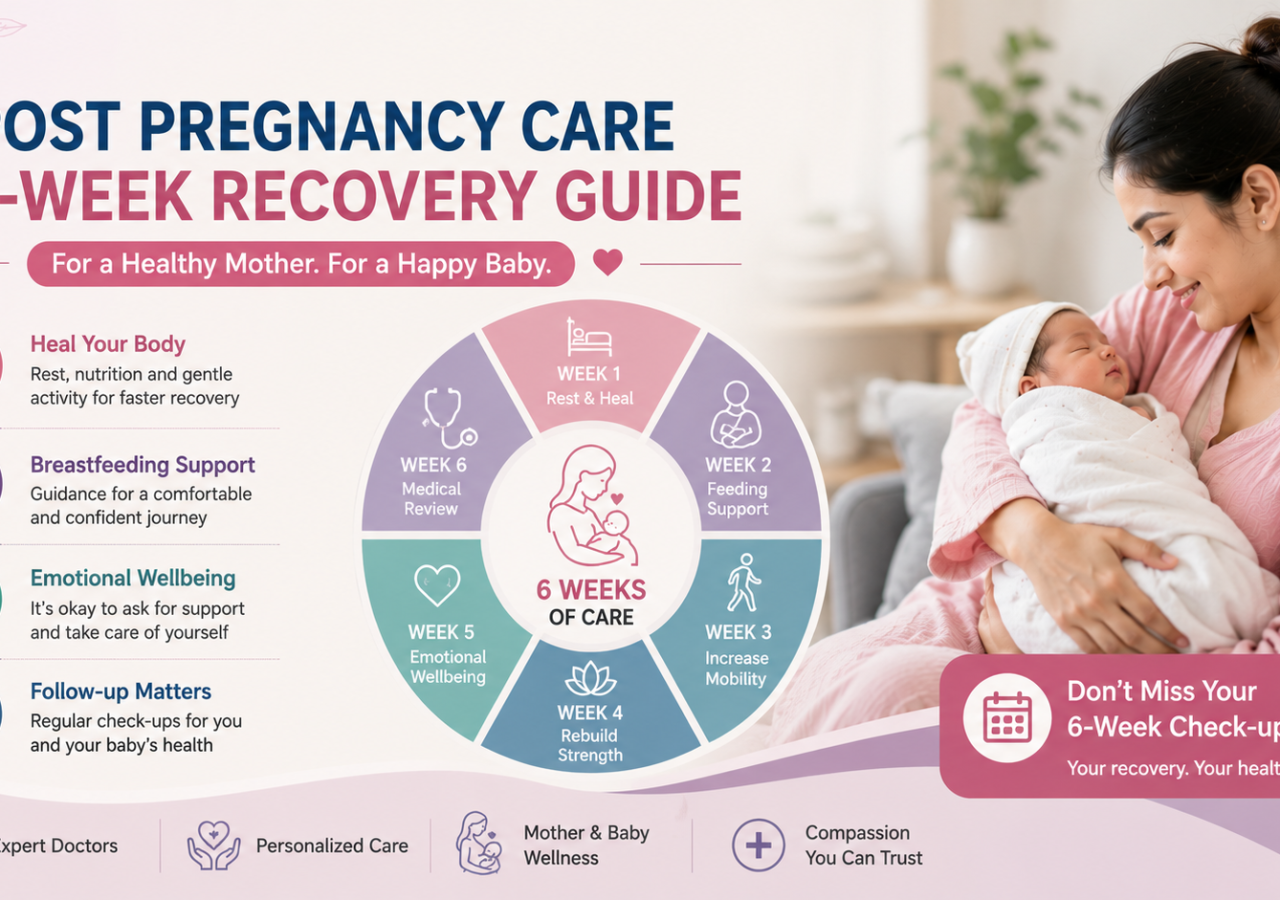
Post pregnancy care is an essential part of maternal healthcare after childbirth, whether a woman has had a vaginal birth or a caesarean delivery. The first six weeks involve physical healing, hormonal adjustment, breastfeeding, sleep changes and emotional adaptation. Follow-up helps identify complications and guides recovery.
Why the First Six Weeks Matter
The weeks after delivery are an important period of recovery. The uterus contracts, postpartum bleeding changes, delivery-related wounds heal and hormone levels adjust. A mother may be adapting to breastfeeding and newborn care. Good post pregnancy care supports this transition.
The World Health Organization describes the first six weeks after childbirth as a critical period for maternal and newborn health and recommends multiple postnatal contacts during this period. WHO recommendations on maternal and newborn care provide evidence-based guidance for mothers and babies.
For this reason, post pregnancy care should be planned around the mother’s individual health rather than treated as a single routine visit.
What Does Post Pregnancy Care Include?
The scope of post pregnancy care depends on the delivery method, pregnancy history, medical conditions and current symptoms. A healthcare professional may review bleeding, blood pressure, pain, uterine recovery, wound healing, breastfeeding and emotional wellbeing.
A postnatal check-up provides an opportunity to review medicines, nutrition, physical activity, contraception and future pregnancy planning. Newborn assessment may include feeding, weight, general health and immunisation according to the recommended schedule.
Maternal and Newborn Assessment
Newborn and mother care should consider both individuals. The mother may need assessment for anaemia, infection or wound healing, while the baby may need monitoring of feeding, growth, jaundice and general wellbeing.
A coordinated service can help families understand expected recovery and when earlier assessment is needed.
Key Areas of Maternal Assessment
- Maternal physical recovery
- Feeding and nutrition
- Emotional wellbeing and family planning
The Six-Week Recovery Guide
Recovery is individual, and this timeline is general guidance rather than a fixed schedule.
Week 1: Rest, Healing and Observation
During the first week, vaginal bleeding, known as lochia, normally changes gradually. Uterine cramping, tiredness and soreness may occur.
Early post pregnancy care focuses on rest, hydration, prescribed medicines, wound observation and gentle mobility.
- Very heavy bleeding, especially with dizziness or weakness
- High fever, severe or worsening pain, chest pain or breathing difficulty
- Fainting, severe headache with visual changes or other significant symptoms
These warning signs require prompt medical evaluation.
Weeks 2–3: Feeding and Gradual Mobility
During weeks two and three, mobility generally increases gradually, although fatigue can remain substantial. Activity should increase according to comfort and clinical advice.
Professional breastfeeding support can be valuable for painful feeding, engorgement, nipple problems, attachment difficulties or concerns about milk supply. A trained professional can assess feeding technique and provide guidance.
Weeks 4–5: Rebuilding Strength
By weeks four and five, many women begin returning gradually to routine activities. However, tiredness, pelvic discomfort or abdominal sensitivity may continue.
Postpartum recovery can differ after vaginal and caesarean birth. Following a caesarean delivery, the abdominal incision and deeper tissues require healing, so strenuous activity may need to remain restricted.
Cesarean delivery recovery should therefore be gradual. Increasing activity simply because pain has reduced may not always be appropriate. The treating doctor can provide individual guidance about wound care, lifting, exercise and return to work.
Week 6: Comprehensive Review
The six-week stage is an important opportunity to review physical recovery, feeding, emotional wellbeing, contraception and persistent symptoms.
A postnatal check-up may include discussion of bleeding, uterine recovery, blood pressure, anaemia, wound healing, pelvic floor symptoms, breastfeeding and sexual health. Women with complications may require assessment sooner than six weeks.
The six-week review should not be considered merely a clearance appointment. It can identify concerns that need continued treatment, investigation or referral.
Breastfeeding, Nutrition and Newborn Care
Post pregnancy care also involves supporting the mother as she establishes feeding routines and adapts to the nutritional and physical demands of caring for a newborn.
Breastfeeding is a learning process for both mother and baby. Positioning, attachment, feeding frequency and maternal comfort can influence the early experience.
Helping Mothers With Breastfeeding
Breastfeeding support can be particularly useful when feeding causes persistent pain or attachment difficulties. Professional assessment can help identify feeding problems and provide appropriate guidance.
Nutrition and hydration remain important, although individual requirements vary according to health, diet and breastfeeding status.
Coordinated Care for Mother and Baby
Newborn and mother care works best when both are considered together. The newborn may require monitoring of feeding, weight, jaundice and wellbeing, while the mother may need assessment of bleeding, blood pressure, wound healing and emotional health.
Families should follow the recommended newborn vaccination and follow-up schedule and seek medical attention when either mother or baby develops concerning symptoms.
Mental and Emotional Health After Childbirth
Post pregnancy care should address emotional wellbeing as well as physical recovery. Hormonal changes, sleep disruption, physical discomfort and the responsibilities of caring for a newborn can affect mood and anxiety.
Temporary emotional changes may occur, but persistent or severe symptoms should not be dismissed.
Recognising Emotional Health Concerns
Persistent low mood, excessive anxiety, irritability, loss of interest, overwhelming worry or difficulty functioning may require professional assessment.
Family members can provide non-judgemental support. Severe emotional distress, confusion or thoughts of self-harm require urgent medical attention.
Cesarean Delivery Recovery
A caesarean birth is abdominal surgery, so recovery may involve additional wound care and restrictions on physical activity compared with an uncomplicated vaginal delivery.
During cesarean section care, mothers should follow the treating team’s instructions regarding wound care, prescribed medicines, activity and follow-up.
Supporting Surgical Recovery
The incision should be monitored for changes, and heavy lifting or strenuous exercise should be avoided until the treating doctor considers them appropriate.
Persistent pain, difficulty moving or urinary problems should be discussed during follow-up.
When Should a Mother Seek Medical Attention?
Some postpartum symptoms require prompt professional evaluation rather than waiting for a scheduled appointment.
Important Warning Signs
- Very heavy vaginal bleeding, especially with dizziness or weakness
- High fever, chills or worsening abdominal or pelvic pain
- Severe headache, visual changes, chest pain, breathing difficulty or fainting
- Increasing wound redness, swelling, discharge or pain after caesarean delivery
- Severe emotional distress, confusion or thoughts of self-harm
These symptoms warrant medical assessment.
Vaginal Birth and Caesarean Recovery Compared
| Aspect | Vaginal Birth | Caesarean Birth |
| Main healing area | Birth canal and pelvic floor may require recovery | Abdominal incision and internal tissues require healing |
| Mobility | Often increases progressively | May progress more gradually |
| Wound care | Perineal care may be required if stitches are present | Incision care is important |
| Pain | Pelvic, perineal or uterine cramping may occur | Abdominal and incision discomfort may occur |
| Activity | Gradual return according to advice | Strenuous activity should wait for medical clearance |
| Follow-up | Based on symptoms and clinical needs | Surgical recovery and wound healing require attention |
Individual recovery depends on delivery circumstances and medical history.
Choosing Postnatal Care in Himatnagar
Families seeking postnatal care in Himatnagar should consider whether the healthcare facility can support maternal recovery as well as newborn needs. Continuity of care can make it easier to review delivery records, recognise complications and arrange follow-up.
A post pregnancy care center should ideally provide maternal assessment, feeding guidance, newborn follow-up and counselling about recovery, contraception and future health.
For nearby families, a maternity hospital near Modasa or normal delivery hospital near Talod may be considered according to location and available services.
Postpartum Recovery Beyond Six Weeks
Postpartum recovery can continue beyond the initial six-week period. Some women may experience ongoing pelvic floor symptoms, fatigue, breastfeeding concerns, menstrual changes or emotional difficulties.
The end of six weeks should therefore not be interpreted as the end of maternal healthcare. Women should discuss persistent or new symptoms with a qualified healthcare professional.
Continuing Women’s Healthcare
A full body checkup for women may form part of longer-term preventive healthcare when clinically appropriate. Harsh Hospital also provides women’s hospital services beyond pregnancy, supporting gynecological and preventive healthcare needs after the maternity period.
Women should continue appropriate screening and seek medical advice for persistent symptoms.
Post Pregnancy Care at Harsh Hospital
At Harsh Hospital in Himatnagar, post pregnancy care is approached as a continuation of maternity care rather than a visit.
The clinical team can review maternal recovery, discuss common concerns and guide mothers regarding post pregnancy care.
For women seeking information about post pregnancy care, the website provides general service information; individual symptoms require professional assessment.
Plan Your Postnatal Follow-Up
A structured postnatal plan helps mothers understand recovery and recognise when professional assessment is needed. If you have recently delivered and have concerns about bleeding, wound healing, breastfeeding, physical recovery or emotional wellbeing, consult a qualified gynecologist.
Families can contact Harsh Hospital for maternal and newborn follow-up.
About Harsh Hospital
Harsh Hospital is a gynecology, maternity and women’s healthcare hospital in Himatnagar, Gujarat, providing maternity, gynecological, preventive and minimally invasive surgical services.
Frequently Asked Questions
1. What is post pregnancy care?
Post pregnancy care covers physical, emotional and medical support after childbirth, including recovery monitoring, feeding guidance and continued maternal and newborn care.
2. When should a mother have a postnatal review?
Timing depends on the mother’s health and delivery. Routine contacts are recommended during the first six weeks, with earlier review when symptoms or complications occur.
3. What does a post pregnancy care center provide?
It may provide maternal assessment, feeding guidance, newborn follow-up, wound review and counselling about nutrition, contraception and recovery.
4. What is important after a caesarean birth?
Recovery includes incision care, prescribed medicines, gradual activity and follow-up. Fever, increasing pain, redness or wound discharge should be assessed promptly.
5. How long can recovery after childbirth take?
Six weeks is an important review period, but healing can take longer depending on delivery type, complications and individual health.
6. Is professional breastfeeding help necessary for every mother?
Not every mother needs assistance, but trained guidance can help with nipple pain, attachment difficulty, feeding concerns or uncertainty about establishing a routine.
7. Which symptoms after delivery need urgent medical attention?
Heavy bleeding, high fever, severe pain, breathing difficulty, chest pain, fainting, wound problems or severe emotional symptoms require prompt evaluation.
8. Does post pregnancy care end after six weeks?
No. Continued care may be needed for breastfeeding, pelvic floor symptoms, contraception, menstrual changes, emotional health or other gynecological concerns.
Conclusion
The first six weeks after childbirth involve substantial physical and emotional changes. Effective post pregnancy care helps mothers monitor healing, recognise warning signs, establish feeding routines and obtain appropriate support for physical and emotional wellbeing.
Vaginal and caesarean deliveries can involve different recovery requirements, and there is no single timeline that applies to every woman. Persistent pain, abnormal bleeding, breastfeeding difficulties, wound problems or emotional distress should be discussed with a qualified healthcare professional.
Harsh Hospital in Himatnagar provides maternity, postnatal and women’s healthcare services with an emphasis on appropriate clinical assessment and continuity of care.