
11/18/2026 · menstrual disorder treatment
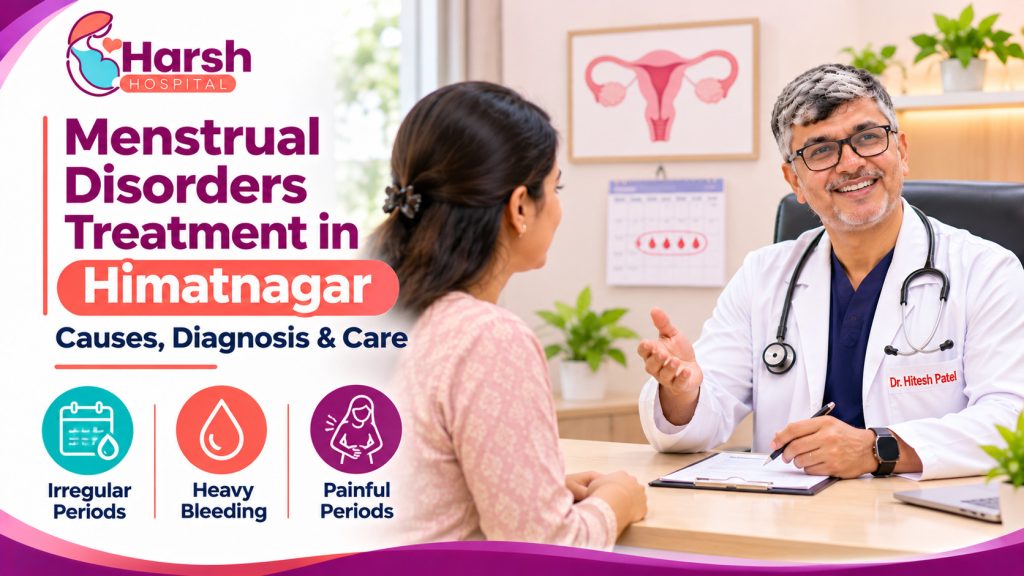
| Quick Answer
Treatment options for menstrual disorders in Himatnagar depend on the cause and include lifestyle changes, medicines to regulate cycles or reduce heavy bleeding, treatment of thyroid or hormonal problems and, when needed, procedures or surgery. A gynecologist first examines you, orders tests such as blood work and ultrasound and then recommends a plan. |
Many women live with irregular, heavy or painful periods for months or years before seeking help, often unsure whether their symptoms are normal. This guide answers the questions patients ask most often about menstrual disorders treatment in Himatnagar what menstrual disorders are, what causes them, how they are diagnosed, which treatments are available and when to see a gynecologist. It also explains how Harsh Hospitals in Himatnagar approaches evaluation and care, so that women can seek help early and with confidence. Throughout, the focus is on practical answers rather than medical jargon.
What Are Menstrual Disorders?
Menstrual disorders are changes in the regularity, frequency, duration or volume of periods, or pain and symptoms that interfere with daily life. The National Institute of Child Health and Human Development describes menstrual irregularities as changes to the menstrual cycle that result in missed periods, irregular periods or excessive bleeding, and notes that treatments vary depending on the type and cause, and may include lifestyle changes, medications or surgery. Understanding this range is the first step toward finding suitable menstrual disorders treatment in Himatnagar or anywhere else.
What Are the Common Menstrual Disorders in Women?
Common menstrual disorders in women include several patterns that doctors distinguish carefully because each has different causes and treatment:
- Irregular or infrequent periods, including cycles that are very long or unpredictable
- Absent periods when pregnancy is not the cause
- Heavy or prolonged bleeding that affects daily life or causes anemia
- Painful periods that do not settle with simple measures
- Bleeding between periods or after intercourse
- Premenstrual symptoms that significantly affect mood or work
Knowing which pattern applies helps the doctor decide which tests are needed and which treatment is likely to help.
What Causes Irregular Periods?
The causes of irregular periods fall into several groups. Hormonal causes include polycystic ovary syndrome, thyroid disorders and raised prolactin levels. Structural causes include fibroids, polyps and adenomyosis. Lifestyle factors include significant weight change, intense exercise and prolonged stress, and some medicines, including hormonal contraceptives, can alter cycles. It is also normal for periods to be irregular around puberty, after childbirth and during perimenopause. Because pregnancy is a common reason for a missed period, it is considered early in evaluation, and the causes of irregular periods are then narrowed down step by step. Understanding the causes of irregular periods matters because treatment targets the cause rather than the symptom alone, and this is the foundation of good menstrual disorders treatment in Himatnagar.
How Common Are Menstrual Problems?
The NCBI Bookshelf StatPearls chapter on abnormal uterine bleeding states that up to one-third of women experience abnormal uterine bleeding at some point in life, most commonly around menarche and perimenopause. This means menstrual problems are common and that seeking evaluation is nothing to be embarrassed about. It also means doctors offering menstrual disorders treatment in Himatnagar have well-established ways to assess and treat them, including identifying the causes of irregular periods through simple tests.
How Is a Menstrual Disorder Diagnosed?
Menstrual disorder diagnosis and treatment begin with a detailed conversation. The doctor asks about cycle length, flow, pain, associated symptoms, previous pregnancies, medicines, weight changes and family history, followed by a general and pelvic examination. Investigations are chosen to suit the findings and may include blood tests for hemoglobin, thyroid function, prolactin and other hormones, along with pelvic ultrasound to assess the uterus and ovaries. Endometrial sampling or hysteroscopy is considered only when indicated, for example with persistent heavy bleeding or bleeding after menopause. Because menstrual disorder diagnosis and treatment depend on the cause, accurate evaluation prevents unnecessary or ineffective therapy, a principle that applies to all menstrual disorders treatment in Himatnagar.
What Are the Treatment Options for Menstrual Disorders in Himatnagar?
Treatment options for menstrual disorders in Himatnagar follow the same principles as elsewhere and depend on the cause, age, symptoms and the woman’s plans regarding pregnancy. The table below summarizes common situations in general terms.
| Cause or Pattern | Typical Approach | Key Point |
| Polycystic ovary syndrome | Lifestyle measures, medicines to regulate cycles, ovulation induction if conceiving | Long-term management and monitoring |
| Thyroid or prolactin disorder | Treat the underlying hormonal disorder | Cycles often improve once corrected |
| Heavy bleeding with anemia | Medicines to reduce bleeding, iron supplements | Underlying cause is assessed |
| Fibroids or polyps | Observation, medicines or procedure depending on size and symptoms | Surgery only when appropriate |
| Painful periods | Pain relief, hormonal treatment, evaluation for endometriosis | Persistent pain needs assessment |
| Perimenopausal changes | Symptom management and monitoring | Individual advice is essential |
Treatment is never one-size-fits-all, and a good doctor explains why a particular option is suggested and what alternatives exist. Women exploring menstrual disorders treatment in Himatnagar should expect this kind of explanation at every step.
How Is Hormonal Imbalance Treated?
Hormonal imbalance treatment in Himatnagar begins with identifying which hormone is involved. Thyroid disease is treated with medicines to normalize thyroid function, raised prolactin may be treated with medicines after evaluation for its cause, and polycystic ovary syndrome is managed with a combination of lifestyle measures and medicines tailored to the woman’s goals. Because hormonal imbalance treatment in Himatnagar often continues for months and needs periodic review, regular follow-up is part of the plan. Women should not start hormonal medicines on their own, since dosing and monitoring need medical supervision, particularly during menstrual disorders treatment in Himatnagar that may last several months.
How Is Irregular Periods Treatment in Himatnagar Planned?
Irregular periods treatment in Himatnagar is planned after evaluation and depends on whether pregnancy is desired. For women not planning pregnancy, treatment may focus on regulating cycles and protecting the uterine lining. For women who wish to conceive, the focus shifts to restoring ovulation. Women can ask about irregular periods treatment in Himatnagar to understand what the evaluation and follow-up involve. Irregular periods treatment in Himatnagar may also include dietary and activity advice, since weight and lifestyle influence cycles.
What Does a Menstrual Disorder Specialist Do?
Specialist input is central to menstrual disorders treatment in Himatnagar. A menstrual disorder specialist in Himatnagar is usually a gynecologist with experience in cycle-related problems. The specialist evaluates symptoms, orders appropriate tests, explains the diagnosis and options and monitors response to treatment, coordinating with other doctors such as endocrinologists when needed. When choosing a menstrual disorder specialist in Himatnagar, women may consider qualification, experience with hormonal and menstrual conditions and willingness to explain findings clearly. A good menstrual disorder specialist in Himatnagar also respects privacy, since many women find these topics difficult to discuss, and privacy is central to comfortable menstrual disorders treatment in Himatnagar.
How Can You Find a Menstrual Problems Doctor in Himatnagar?
Finding a menstrual problems doctor in Himatnagar involves checking qualification, asking about experience and noting how comfortable you feel asking questions. Women can review the profile of a menstrual problems doctor in Himatnagar at Harsh Hospitals before booking. A menstrual problems doctor in Himatnagar who explains the plan and the reasons for each test is more likely to give care that fits the patient and to deliver effective menstrual disorders treatment in Himatnagar.
When Should You Consult a Gynecologist for Menstrual Problems?
Knowing when to consult a gynecologist for menstrual problems prevents delay. Consider booking a visit if:
- Periods suddenly become irregular, or occur less often than every 35 days or more often than every 21 days
- Bleeding lasts longer than seven days, or is heavy enough to soak through pads every hour or two
- You have severe pain that interferes with daily activity
- You bleed between periods, after intercourse or after menopause
- You are trying to conceive and have irregular or absent periods
You can book a consultation at Harsh Hospitals by phone or online. Seek urgent care for very heavy bleeding with dizziness or fainting, or for severe sudden pain, even if you are already receiving menstrual disorders treatment in Himatnagar. The decision on when to consult a gynecologist for menstrual problems should not depend on embarrassment or on whether the symptoms seem minor.
What Care Is Available at Harsh Hospitals, Himatnagar?
Harsh Hospitals in Himatnagar, Sabarkantha, provides gynecological consultation, ultrasound assessment, medical management and, when needed, laparoscopic or open procedures for benign conditions under the supervision of Dr. Hitesh A. Patel. For women seeking menstrual disorders treatment in Himatnagar, the team begins with history and examination, selects investigations based on need and explains the diagnosis, alternatives and risks before any plan is finalized. Local access to menstrual disorders treatment in Himatnagar also makes follow-up visits and monitoring easier for families in Sabarkantha.
What Lifestyle Measures Can Support Treatment?
Doctors often recommend balanced meals, regular physical activity, adequate sleep and stress management alongside medical treatment, because these measures support hormonal balance. Gradual, sustainable weight management helps many women with polycystic ovary syndrome, while avoiding extreme dieting or over-exercise protects cycles in others. These steps complement, and never replace, medical advice.
Why Does Early Evaluation Help?
Knowing when to consult a gynecologist for menstrual problems early means that early evaluation can identify treatable causes such as thyroid disease or anemia before they cause complications, reduce the duration of discomfort and help women who wish to conceive. It also provides reassurance when the findings are normal, and it makes menstrual disorders treatment in Himatnagar simpler and shorter. Women should keep a simple record of period dates, flow and symptoms, which gives the doctor useful information.
Book Your Consultation
| If your periods are irregular, heavy or painful, you do not have to wait. Speak with the team at Harsh Hospitals, Himatnagar, for evaluation and a clear plan. Call 99132 33538 or book an appointment online to discuss your symptoms. |
About Harsh Hospitals
Harsh Hospitals is a women’s healthcare and maternity hospital in Himatnagar, Sabarkantha, Gujarat, offering gynecology, obstetrics, painless delivery and advanced laparoscopic surgical services. The hospital is led by Dr. Hitesh A. Patel, MD, DGO, and is located near Mehta Petrol Pump, Himatnagar.
Conclusion
Menstrual disorders are common, treatable and best addressed early, which is why knowing when to consult a gynecologist for menstrual problems matters. Understanding causes, diagnosis and treatment options helps women seek menstrual disorders treatment in Himatnagar with confidence and avoid unnecessary delay. With its patient-focused approach, Harsh Hospitals remains a dependable choice for women in Himatnagar and across North Gujarat seeking clear, compassionate gynecological care.
Frequently Asked Questions
What is menstrual disorders treatment in Himatnagar?
Menstrual disorders treatment in Himatnagar means evaluation and care for irregular, heavy, painful or absent periods, including tests, medicines, lifestyle advice and procedures when needed.
What causes irregular periods?
Common causes include polycystic ovary syndrome, thyroid problems, raised prolactin, fibroids, weight change, stress, certain medicines and normal life stages such as puberty or perimenopause.
What are common menstrual disorders in women?
They include irregular or absent periods, heavy or prolonged bleeding, painful periods, bleeding between periods and significant premenstrual symptoms. Each has different causes and treatments.
How is menstrual disorder diagnosis and treatment done?
It starts with history and examination, followed by blood tests and ultrasound. Treatment is then chosen according to the cause, your age and your plans for pregnancy.
How is hormonal imbalance treatment in Himatnagar planned?
Hormonal imbalance treatment in Himatnagar depends on which hormone is affected. Doctors test hormone levels, treat the cause and monitor response, so self-medication is not advised.
When should I consult a gynecologist for menstrual problems?
See a gynecologist if periods are suddenly irregular, last longer than seven days, are very heavy or painful, or occur with bleeding between periods or after menopause.
Who is a menstrual disorder specialist in Himatnagar?
A gynecologist experienced in cycle-related problems. Harsh Hospitals in Himatnagar offers consultation and evaluation. Call 99132 33538 to book an appointment.
Are menstrual problems curable?
With appropriate menstrual disorders treatment in Himatnagar, many menstrual problems can be effectively treated or managed once the cause is identified, though some conditions need long-term care. Your doctor explains what to expect.
| This article is for general educational purposes and should not replace consultation with a qualified healthcare professional. |