
09/02/2026 · laparoscopic surgery
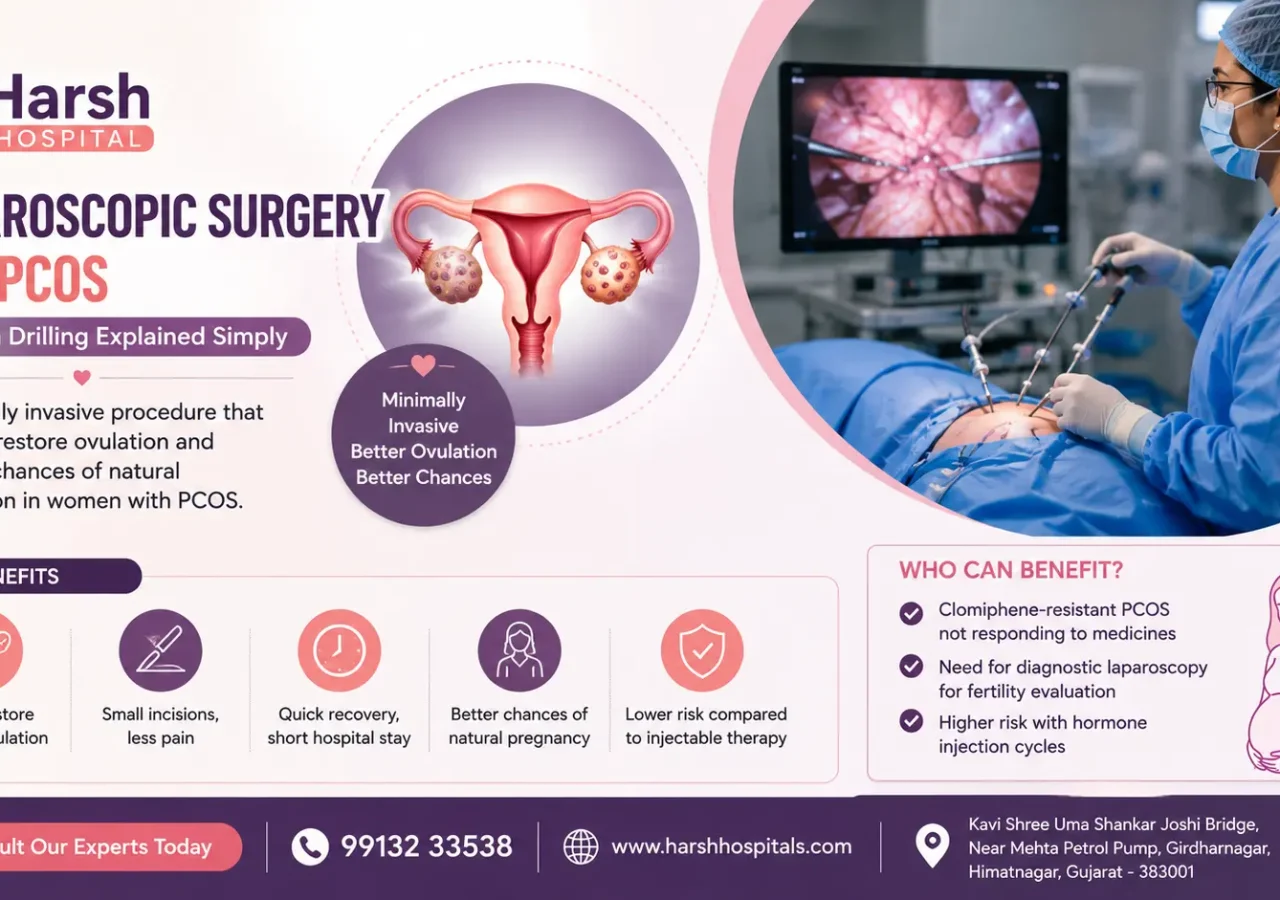
For women who have not responded to standard fertility medications, laparoscopic surgery for PCOS is often discussed as a structured next step in the treatment pathway, particularly when ovulation induction alone has not been successful. Polycystic Ovary Syndrome (PCOS) affects ovulation, hormone balance, and, in many cases, a woman’s ability to conceive naturally, which is why understanding the full range of treatment options matters. One such option, laparoscopic ovarian drilling, is a minimally invasive procedure that has been used for decades to help restore regular ovulation in select patients. Before considering laparoscopic surgery for PCOS, it is important to understand how the condition is diagnosed, when surgery becomes a relevant consideration, and what patients can realistically expect from the procedure.
This article explains ovarian drilling in clear, patient-friendly language, based on established clinical practice in the evaluation and management of PCOS-related infertility.
Understanding PCOS and Why Surgical Treatment Is Considered
Polycystic Ovary Syndrome is a hormonal condition affecting how the ovaries function, commonly presenting with irregular periods, excess androgen levels, and multiple small follicles visible on ultrasound. Many women also report symptoms such as acne, unwanted facial or body hair growth, and difficulty maintaining a healthy weight, though the pattern and severity of symptoms can vary widely between patients. For many women, lifestyle changes and oral medications such as clomiphene citrate remain the first line of management before pcos surgical treatment is even considered. However, when a patient does not respond adequately to these measures, clinicians may discuss pcos surgical treatment as an additional option, particularly for women trying to conceive.
When Does PCOS Move From Medical to Surgical Management?
Surgical treatment for PCOS infertility is generally considered only after conservative approaches have been tried and reassessed, not as a first-line intervention. This stepwise approach reflects standard gynecological practice, where surgery is reserved for patients whose ovulatory dysfunction persists despite adequate medical therapy.
What Is Laparoscopic Ovarian Drilling for PCOS?
Laparoscopic ovarian drilling for PCOS is a minimally invasive surgical procedure performed under general anesthesia, typically as a day-care or short-stay procedure. Using a laparoscope inserted through a small abdominal incision, the surgeon applies controlled thermal or electrosurgical energy to a limited number of points on the ovarian surface. This reduces androgen-producing ovarian tissue and can help restore a more regular hormonal environment conducive to ovulation.
How the Procedure Works
The PCOS ovarian drilling procedure typically takes between 30 and 45 minutes, depending on the extent of ovarian involvement and any additional findings during diagnostic laparoscopy. Patients are usually discharged within a day, and normal activity can often resume within a week, though this varies by individual recovery.
Who Needs Surgical Treatment for PCOS Infertility
Not every woman diagnosed with PCOS is a candidate for laparoscopic surgery for PCOS. Surgical treatment for PCOS infertility is typically considered for patients who meet specific clinical criteria, which a gynecologist evaluates on a case-by-case basis.
- Women with confirmed clomiphene-resistant PCOS who have not ovulated after adequate medical therapy.
- Patients requiring concurrent diagnostic laparoscopy for suspected tubal or pelvic pathology.
- Women for whom repeated cycles of gonadotropin therapy carry a higher risk of ovarian hyperstimulation.
Each of these situations requires individualized assessment, and laparoscopic surgery for PCOS is only recommended after this evaluation confirms it is an appropriate option.
Ovarian Drilling Success Rate and Expected Benefits
Patients frequently ask about the ovarian drilling success rate before deciding whether to proceed. A follow-up study conducted at a tertiary referral teaching hospital reported a spontaneous ovulation rate of 81.8 percent, with a cumulative ovulation rate close to 94 percent and pregnancy achieved in just over half of the patients followed over several years. These figures illustrate a meaningful clinical benefit, though individual outcomes vary considerably and the ovarian drilling success rate cannot be guaranteed for any specific patient.
One advantage often highlighted in laparoscopic surgery for PCOS is that, unlike gonadotropin injections, it does not carry the same elevated risk of multiple pregnancy or ovarian hyperstimulation syndrome, making it a preferred option for certain patients.
Laparoscopic Surgery – PCOS vs Medical Ovulation Induction: A Comparison
Understanding the practical differences between these two approaches can help patients discuss options more confidently with their gynecologist.
|
Parameter |
Laparoscopic Ovarian Drilling |
Medical Ovulation Induction |
|
Approach |
Minimally invasive day-care surgery |
Oral or injectable medication cycles |
|
Risk of multiple pregnancy |
Low |
Higher with gonadotropins |
|
Risk of OHSS |
Low |
Present, especially with gonadotropins |
|
Recovery |
A few days |
No surgical recovery needed |
|
Suitability |
Clomiphene-resistant cases |
First-line for most patients |
|
Monitoring required |
Pre- and post-operative evaluation |
Frequent ultrasound and hormone monitoring |
This comparison is general in nature, and the right approach depends on individual clinical evaluation rather than personal preference alone.
Diagnosis and Evaluation Before Laparoscopic Surgery – PCOS
Before recommending laparoscopic surgery for PCOS, a thorough clinical workup is essential. This typically includes a detailed menstrual and fertility history, hormonal blood tests, pelvic ultrasound, and a review of prior treatment response. A structured infertility evaluation helps confirm the diagnosis, rule out other causes of anovulation, and determine whether surgical intervention is likely to be beneficial for the individual patient.
Accessing Laparoscopic Surgery Services and Regional Care
Patients across North Gujarat increasingly have access to laparoscopic surgery in Himatnagar, reducing the need to travel to larger cities for specialized gynecological procedures. Women who previously travelled long distances for laparoscopic surgery in Himatnagar can now consult locally for evaluation and treatment planning. Reviewing the full range of laparoscopic surgery services available at a hospital can help patients understand what to expect, from diagnostic laparoscopy to more targeted procedures such as ovarian drilling.
Understanding the Cost of Laparoscopic Surgery for PCOS
Cost is a common and legitimate concern for patients evaluating laparoscopic surgery for PCOS. The overall laproscopic surgery cost depends on several factors that vary between patients and hospitals, and patients considering pcos surgical treatment are encouraged to request a detailed estimate during their consultation. Our laparoscopic surgery cost guide outlines common factors that typically influence laproscopic surgery cost for procedures such as ovarian drilling.
- The complexity of the procedure and whether diagnostic laparoscopy is combined with ovarian drilling.
- Type of anesthesia administered and the duration of hospital stay.
- Pre-operative investigations and post-operative follow-up requirements.
Risks, Recovery and When to Seek Medical Advice
Like any surgical procedure, laparoscopic ovarian drilling for PCOS carries some risks, including infection, bleeding, or, in rare cases, adhesion formation around the ovaries. These risks are discussed in detail with patients as part of the informed consent process before any laparoscopic surgery for PCOS is scheduled.
Recovery After Ovarian Drilling
Most patients resume light activities within a few days and normal routines within one to two weeks. Mild shoulder-tip discomfort and bloating in the first day or two are common and generally resolve on their own, as they are related to the gas used to create space for the laparoscope during the procedure. Patients should seek prompt medical attention if they experience persistent fever, worsening pelvic pain, or heavy bleeding after the procedure.
About Harsh Hospitals
Harsh Hospitals is a healthcare provider based in Himatnagar, Gujarat, offering gynecological and laparoscopic surgical care, including evaluation and treatment for PCOS-related infertility. The hospital’s approach emphasizes thorough diagnosis, transparent communication, and structured follow-up throughout the patient’s treatment journey, with attention given to both the physical and emotional aspects of a fertility-related diagnosis.
Ready to take the next step? If you have been trying to conceive without success and PCOS has been diagnosed, we encourage you to schedule a consultation with our gynecology team to discuss whether laparoscopic surgery for PCOS may be an appropriate option for your specific situation.
Conclusion
Laparoscopic surgery for PCOS, particularly ovarian drilling, offers a well-established surgical option for women with clomiphene-resistant PCOS who have not achieved ovulation through medical management alone. While outcomes vary between individuals, the procedure remains a valuable tool within a broader fertility treatment plan. At Harsh Hospitals, patients can expect a thorough, evidence-based approach to diagnosis and treatment, guided by specialists who prioritize patient safety and clear communication at every step.
Frequently Asked Questions
1. What is laparoscopic surgery for PCOS?
Laparoscopic surgery for PCOS, most commonly ovarian drilling, is a minimally invasive procedure used to help restore ovulation in women who have not responded to standard fertility medications.
2. Who is a good candidate for laparoscopic ovarian drilling for PCOS?
Women with clomiphene-resistant PCOS who have not ovulated despite adequate medical therapy are typically considered candidates, following a detailed clinical evaluation.
3. Is laparoscopic surgery for PCOS a permanent cure?
This procedure can help restore ovulation for a period of time, but it does not permanently cure the underlying hormonal condition, and some patients may require additional treatment later.
4. How long does the PCOS ovarian drilling procedure take?
The procedure typically takes 30 to 45 minutes under general anesthesia, and most patients are discharged the same day or within 24 hours.
5. What is the recovery time after laparoscopic surgery for PCOS?
Most patients resume light activity within a few days and return to normal routines within one to two weeks, though recovery can vary based on individual health factors.
6. Does laparoscopic surgery for PCOS guarantee pregnancy?
No treatment can guarantee pregnancy. This procedure improves the chances of ovulation in appropriate candidates, but conception depends on multiple additional factors.
7. How much does laparoscopic surgery for PCOS typically cost?
Costs vary depending on the complexity of the procedure, anesthesia requirements, and hospital stay, so patients are encouraged to request a personalized estimate during consultation.
8. When should I consult a doctor about PCOS-related infertility?
You should consult a gynecologist if you have irregular periods, have been trying to conceive for over a year without success, or have not ovulated despite standard fertility medications.