
11/25/2026 · laparoscopic surgeon
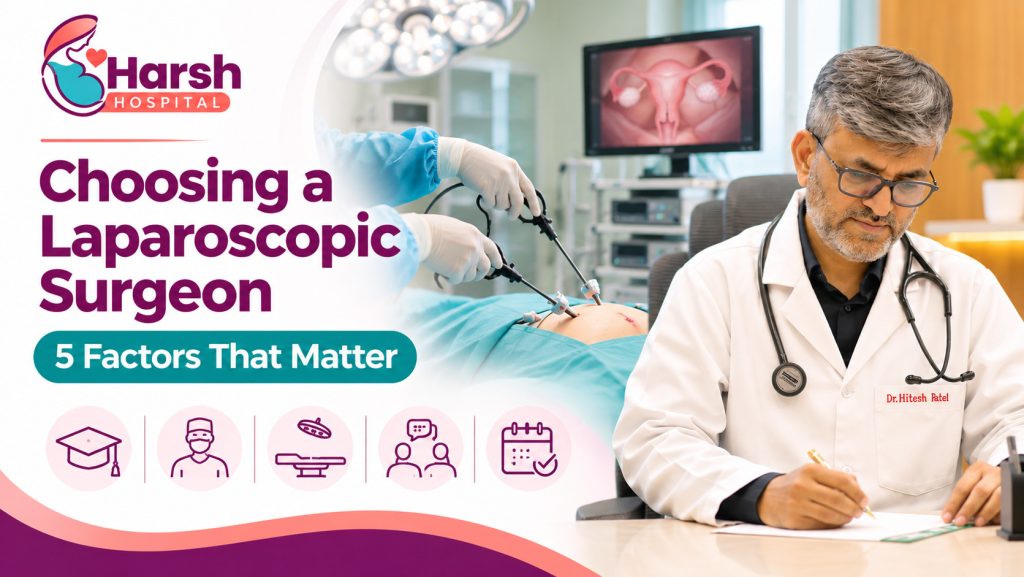
Quick Answer: What Should You Look for in a Laparoscopic Surgeon in Himatnagar?
Look for five things: recognised qualifications and training, procedure-specific experience, a hospital with proper infrastructure and safety systems, transparent counselling about risks and alternatives, and structured post-operative follow-up. A laparoscopic surgeon in Himatnagar who meets these criteria is better placed to deliver safe, minimally invasive care.
Keyhole techniques have become a standard approach for many gynecological conditions, yet the outcome of any procedure still depends on the surgeon, the team and the hospital. Patients and families in North Gujarat who are advised surgery often ask how to identify a trustworthy laparoscopic surgeon in Himatnagar instead of travelling to larger cities by default. This guide explains what laparoscopy involves, the five factors that matter most, how laparoscopic and open procedures compare, and what recovery looks like. It reflects the clinical approach followed at Harsh Hospital, Himatnagar.
What Is Gynecological Laparoscopic Surgery and When Is It Used?
According to Wikipedia’s overview of laparoscopy, the technique uses a camera and instruments passed through small incisions instead of one large opening. In practice, the abdomen is gently inflated with carbon dioxide gas so the surgeon can view the pelvic organs on a monitor and operate with fine instruments.
Gynecological laparoscopic surgery is commonly used for conditions such as:
- Ovarian cysts: removal of the cyst while preserving healthy ovarian tissue where possible.
- Fibroids: removal of uterine fibroids in selected patients.
- Endometriosis: excision of endometriotic deposits and release of adhesions.
- Hysterectomy for benign conditions: removal of the uterus when other treatments have not been adequate.
- Tubal and fertility-related conditions: evaluation of the tubes and treatment of adhesions or ectopic pregnancy.
Because the incisions are small, minimally invasive surgery in Himatnagar and elsewhere is generally associated with less post-operative pain, smaller scars and a shorter hospital stay than open surgery. Not every patient is a suitable candidate, and the final choice of approach is made after clinical assessment.
Why Does Choosing the Right Laparoscopic Surgeon in Himatnagar Matter?
Laparoscopy is technically demanding. The surgeon works from a two-dimensional screen, with limited tactile feedback, close to the bowel, bladder, ureters and major blood vessels. Risks such as infection, bleeding, injury to nearby organs and the need to convert to open surgery are uncommon but real, and they are best managed by a team with training and experience. Choosing the best laparoscopic surgeon in Himatnagar is therefore not a matter of advertising or convenience alone. It is a decision about safety, judgement and continuity of care. Patients are right to compare each laparoscopic surgeon in Himatnagar on documented training, transparent counselling and follow-up before giving consent.
What Are the Top 5 Factors to Consider When Choosing a Laparoscopic Surgeon in Himatnagar?
1. Are the Qualifications and Training Appropriate?
Verify that the doctor holds recognised postgraduate qualifications in gynecology and is registered with the relevant medical council. Additional training in endoscopic surgery is a meaningful marker of competence. A laparoscopic gynecologist in Himatnagar should be able to explain their training openly and without hesitation, and any laparoscopic surgeon in Himatnagar should welcome that question.
2. Does the Surgeon Have Procedure-Specific Experience?
General experience is not the same as experience in the exact operation you need. A surgeon who performs endometriosis excision regularly brings different skills from one who mainly performs diagnostic laparoscopy. Ask how often the procedure is performed, how complications are handled and when conversion to open surgery would be considered. Experience in laparoscopic hysterectomy in Gujarat, for instance, should be discussed specifically if a hysterectomy is advised.
3. Does the Hospital Offer Safe Infrastructure?
Surgical safety depends on the whole environment. A dependable laparoscopic surgery hospital in Himatnagar should have a modern operating theatre with high-definition imaging, anaesthesia support, sterilisation protocols, blood availability and monitoring in recovery. Access to advanced laparoscopy treatment is valuable only when these supporting systems are equally reliable. Patients seeking minimally invasive surgery in Himatnagar should feel free to ask about these arrangements.
4. Is Counselling Transparent and Consent Informed?
A responsible surgeon explains why surgery is advised, what alternatives exist, what the risks are and what outcomes are realistic. The discussion should leave room for questions and a second opinion, and seeking one from another laparoscopic surgeon in Himatnagar is a reasonable step that a good surgeon will support. Be cautious of anyone who promises guaranteed results or dismisses risks. Good counselling makes it easier to identify the best laparoscopic surgeon in Himatnagar for your own circumstances, because it shows how the doctor communicates.
5. Is Follow-Up and Recovery Support Provided?
Care does not end when the operation does. Look for clear written discharge instructions, scheduled review visits, accessible contact for concerns and guidance on returning to routine activity. Planned recovery after laparoscopic surgery is part of the treatment, not an afterthought. Ask how pathology reports will be shared, when wounds will be reviewed and which symptoms justify an urgent call.
How Do the Five Factors Compare in Practice?
| Factor | What to Ask | Why It Matters |
| Qualifications | Which degrees, registration and endoscopic training do you hold? | Confirms formal competence |
| Experience | How often do you perform this specific procedure? | Skill in one operation does not guarantee skill in another |
| Infrastructure | What anaesthesia, monitoring and emergency support is available? | Complications are safer to manage in a prepared setting |
| Counselling | What are the alternatives and risks for my case? | Supports informed consent |
| Follow-up | Who do I contact after discharge, and when is the review? | Early problems are caught sooner |
What Risks and Limitations Should Patients Understand?
No operation is risk-free. Laparoscopy can involve anaesthesia-related risks, infection, bleeding, injury to the bowel, bladder or ureters, and, occasionally, conversion to an open procedure if safety requires it. Previous abdominal surgery, extensive adhesions, a very large uterus or certain medical conditions may make a keyhole approach less suitable. A responsible laparoscopic surgeon in Himatnagar will explain these limitations during consultation and will not present laparoscopy as the right answer for every patient.
How Should You Prepare for a Consultation?
Bring previous ultrasound or MRI reports, a list of current medicines and any earlier surgical records. Write down your questions in advance, including whom to contact after discharge and what the expected recovery looks like. An experienced laparoscopic gynecologist in Himatnagar will review these records, examine you and explain whether surgery is needed, rather than assume it. Taking a family member along can help you absorb the information and decide without haste.
How Does Laparoscopic Hysterectomy Compare With Open Surgery?
A hysterectomy can be performed through the abdomen, the vagina or by laparoscopy, as outlined in Wikipedia’s article on hysterectomy. For suitable benign conditions, laparoscopic hysterectomy in Gujarat and other regions is often preferred because of its smaller incisions. The comparison below is general and individual suitability varies.
| Aspect | Laparoscopic Approach | Open (Abdominal) Approach |
| Incision | Several small incisions | One larger incision |
| Post-operative pain | Generally lower | Generally higher |
| Hospital stay | Usually shorter | Usually longer |
| Return to routine activity | Generally quicker | Generally slower |
| Suitability | Depends on uterine size, prior surgery and condition | Preferred in some complex or large-uterus cases |
| Conversion possible | Yes, if safety requires | Not applicable |
A reputable laparoscopic surgeon in Himatnagar will recommend the open approach when it is genuinely safer, and this willingness is itself a sign of sound judgement.
What Is Recovery After Laparoscopic Surgery Like?
Recovery after laparoscopic surgery varies by procedure, but most patients walk within hours and are encouraged to resume light activity early. Mild abdominal soreness, bloating and shoulder-tip pain from the gas used during surgery are common and usually settle within days. Heavy lifting, strenuous exercise and driving should follow the surgeon’s specific advice.
Contact your surgeon promptly if you experience any of the following:
- Fever or chills
- Severe or worsening abdominal pain
- Heavy vaginal bleeding or foul-smelling discharge
- Redness, swelling or discharge at a wound site
- Persistent vomiting, difficulty passing urine, calf swelling or shortness of breath
How Does Harsh Hospital Approach Laparoscopic Care?
Harsh Hospital is a gynecology, maternity and laparoscopic hospital in Himatnagar, North Gujarat. Dr. Hitesh Patel, a gynecologist, obstetrician and laparoscopic surgeon with more than 20 years of experience, leads the clinical team. Patients who need keyhole care typically undergo a consultation, relevant investigations and a discussion of alternatives before surgery is planned.
Common patient concerns include scar size, how long they will stay in hospital, when they can return to household work and whether the uterus or ovaries will be preserved; each is addressed before any decision is made. Surgery is recommended only when it is clinically indicated, and medicines or observation are discussed first where appropriate. Our services as a laparoscopic gynecologist in Himatnagar include ovarian cyst surgery, endometriosis surgery and laparoscopic hysterectomy, where clinically appropriate.
For patients considering advanced laparoscopy treatment, surgery is performed in-house, with pre-operative assessment and post-operative review planned together. Patients seeking a laparoscopic surgeon in Himatnagar can therefore expect continuity from the first consultation to the final follow-up visit. As a laparoscopic surgery hospital in Himatnagar, we encourage patients to ask about the procedure, the expected recovery and the alternatives, and to take time for a second opinion if they wish.
Book a Consultation at Harsh Hospital
If you have been advised to undergo laparoscopic surgery, or want a second opinion, a consultation can help you understand your options. Meet Dr. Hitesh Patel at Harsh Hospital, Himatnagar, to discuss your condition with an experienced laparoscopic surgeon in Himatnagar. Book an appointment or call 99132 33538.
Conclusion
Choosing a surgeon is as important as the decision to operate. Qualifications, procedure-specific experience, hospital infrastructure, honest counselling and organised follow-up together give patients a sound basis for choosing a laparoscopic surgeon in Himatnagar with confidence. No single credential guarantees an outcome, but together these factors reduce uncertainty and support informed decisions. Patients who ask these questions early are better prepared and more at ease. With patient-centred, minimally invasive care in North Gujarat, Harsh Hospital Himatnagar supports women through every stage of treatment and recovery.
Frequently Asked Questions
What qualifications should a laparoscopic surgeon in Himatnagar have?
A recognised postgraduate degree in gynecology or surgery, valid medical council registration and additional endoscopic training are important. Ask about experience with your specific procedure as well.
Can a laparoscopic surgeon in Himatnagar convert surgery to an open procedure?
Yes, when safety requires it. A trained surgeon will discuss this possibility during consent so that it is not unexpected.
How do I find the best laparoscopic surgeon in Himatnagar?
Compare qualifications, procedure-specific experience, hospital facilities, counselling quality and follow-up support. Meeting the surgeon first is a better guide than advertising or online ratings alone.
What is minimally invasive surgery in Himatnagar?
It refers to operations performed through small incisions using a camera and fine instruments, such as laparoscopy and hysteroscopy. It is generally associated with smaller scars and quicker recovery than open surgery.
Which conditions need gynecological laparoscopic surgery?
Common indications include ovarian cysts, fibroids, endometriosis, ectopic pregnancy and benign uterine conditions. Your doctor decides after examination and investigations.
Is laparoscopic hysterectomy in Gujarat safe?
It is widely performed and generally well tolerated when carried out by trained surgeons in suitable patients. Risks such as bleeding, infection or organ injury exist and should be discussed beforehand.
What does advanced laparoscopy treatment involve?
It covers more complex keyhole procedures, such as endometriosis excision or hysterectomy, that require greater training and equipment. Suitability is assessed individually.
How do I choose a laparoscopic surgery hospital in Himatnagar?
Check theatre standards, anaesthesia and emergency support, infection-control practices and follow-up arrangements. A hospital that answers these questions openly is usually a good sign.
How long does recovery after laparoscopic surgery take?
Many patients resume light activity within days, though timelines depend on the procedure and individual health. Your surgeon will give personalised instructions.
About Harsh Hospital
Harsh Hospital is a women’s health, maternity and laparoscopic hospital in Himatnagar, North Gujarat, offering gynecology, infertility evaluation, laparoscopic and hysteroscopic surgery and pregnancy care. Address: Near Mehta Petrol Pump, Himatnagar 383001, Gujarat. Timings: Mon–Sat, 9:00 AM – 8:00 PM; Sunday, emergencies only.
Disclaimer: This article is for general educational purposes and should not replace consultation with a qualified healthcare professional.