11/14/2026 · Pregnancy
| Quick Answer
High risk pregnancy in Himatnagar needs early registration, closer monitoring and a specialist led delivery plan. Warning signs such as vaginal bleeding, severe headache, vision changes, sudden swelling, reduced baby movements or leaking fluid need immediate medical attention. Early, regular care helps many women have healthy pregnancies and deliveries. |
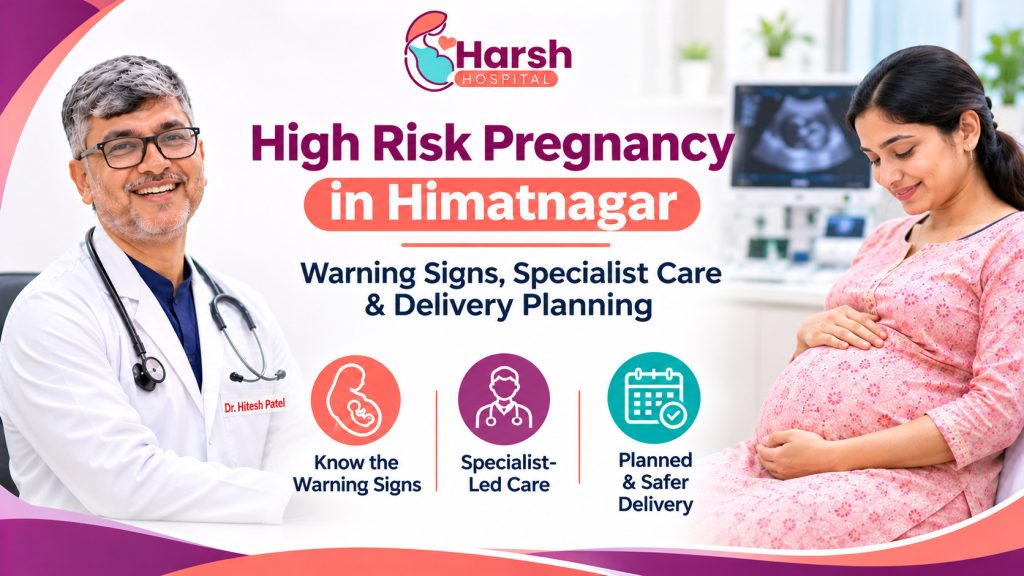
A pregnancy is considered high risk when the mother or baby faces a greater chance of complications than usual, and families searching for high risk pregnancy in Himatnagar are often anxious about what this label means for their care and delivery. In most cases it simply means closer supervision, more frequent visits and careful planning, not an inevitable bad outcome. This guide explains what makes a high risk pregnancy in Himatnagar different, which warning signs matter, how monitoring and delivery planning work and how Harsh Hospitals supports mothers through each stage.
What Is a High Risk Pregnancy?
According to the National Institute of Child Health and Human Development, a high-risk pregnancy is one that threatens the health or life of the mother or the fetus and often requires specialized care, while early and regular prenatal care helps many women have healthy pregnancies and deliveries. Some pregnancies are high risk from the start because of existing conditions, and others become high risk as they progress. Being labeled high risk is a prompt for closer care, and many women who receive it do well. Families dealing with a high risk pregnancy in Himatnagar are often relieved to learn that attentive monitoring can prevent many problems from becoming serious.
Common Risk Factors
Doctors consider a range of factors when assessing risk. These commonly include:
- Existing conditions such as high blood pressure, diabetes, thyroid disease or heart disease
- Pregnancy conditions such as gestational diabetes, preeclampsia or placental problems
- Twins or higher-order multiple pregnancy
- Previous cesarean, preterm birth, stillbirth or pregnancy loss
- Age under 18 or over 35, and significant underweight or obesity
Having one or more of these factors does not mean complications will occur, but it does mean the pregnancy deserves closer attention, and a woman with a high risk pregnancy in Himatnagar should register with a qualified obstetrician as early as possible.
Warning Signs During Pregnancy
Every pregnant woman should know when to seek help quickly. The following warning signs need prompt medical assessment:
- Vaginal bleeding or leakage of fluid
- Severe or persistent headache, blurred vision or flashing lights
- Sudden swelling of the face and hands or rapid weight gain
- Reduced or absent baby movements
- Severe abdominal pain, fever or regular contractions before 37 weeks
These signs may have simple explanations, but they can also signal conditions such as preeclampsia, infection or preterm labor, which is why they should never be ignored. Calling the doctor early is always better than waiting, particularly for women managing a high risk pregnancy in Himatnagar who live some distance from the hospital.
High Risk Pregnancy Specialist in Himatnagar: What Does the Doctor Do?
A high-risk pregnancy specialist in Himatnagar is usually an obstetrician with training and experience in managing complicated pregnancies. The doctor evaluates risk factors, orders additional tests, arranges more frequent visits, coordinates with other specialists such as physicians or anesthetists and plans the timing and mode of delivery. Families can read about the high-risk pregnancy specialist in Himatnagar at Harsh Hospitals before booking, and a good high-risk pregnancy specialist in Himatnagar will explain the plan in simple language and update it as the pregnancy progresses. For a high risk pregnancy in Himatnagar, this personal continuity is often as valuable as any single test.
High-Risk Pregnancy Doctor in Himatnagar: Qualities to Look For
Choosing a high-risk pregnancy doctor in Himatnagar involves practical questions. Does the doctor hold a postgraduate qualification in obstetrics and gynecology, such as MD or DGO? Is the doctor available for emergencies? Is the hospital equipped with anesthesia, blood bank and newborn care? A high-risk pregnancy doctor in Himatnagar who explains risks honestly and refers promptly when a case needs a higher level of care is the safest choice for a high risk pregnancy in Himatnagar.
High-Risk Pregnancy Hospital in Himatnagar: Facilities That Matter
A high-risk pregnancy hospital in Himatnagar should offer ultrasound and laboratory services, an operation theater, round-the-clock anesthesia and obstetric cover, blood bank access and newborn resuscitation capability. It should also have clear arrangements for referring mothers or newborns who need intensive care beyond its facilities. Honesty about these limits is essential, since a high-risk pregnancy hospital in Himatnagar that identifies the need for referral early gives mother and baby the best chance of timely care.
How a High Risk Pregnancy Is Evaluated
The NCBI Bookshelf StatPearls chapter on initial antepartum care explains that the first antenatal visit, ideally in the first trimester, aims to establish the due date, identify high-risk pregnancies and carry out maternal and fetal screening. In practice, evaluation of a high risk pregnancy in Himatnagar begins with a detailed history of previous pregnancies, medical conditions and medicines, followed by examination, blood pressure measurement, blood tests, urine tests and ultrasound. Further tests such as glucose tolerance testing, Doppler studies or growth scans may be added depending on the findings, and these steps apply to every high risk pregnancy in Himatnagar and elsewhere.
High-Risk Pregnancy Monitoring: What to Expect
High-risk pregnancy monitoring is tailored to the condition. The table below summarizes common situations in general terms, and the schedule is always set by the treating doctor.
| Condition | Why It Is Monitored | Typical Monitoring |
| Hypertension or preeclampsia | Risk to mother and baby’s growth | Frequent blood pressure checks, urine and blood tests, growth scans |
| Gestational or pre-existing diabetes | Risk of large baby and metabolic complications | Blood sugar monitoring, dietary guidance, growth scans |
| Twin pregnancy | Higher risk of preterm birth and growth differences | More frequent scans and visits |
| Previous cesarean or preterm birth | Risk to the uterine scar or recurrence | Early assessment, cervical length and delivery planning |
| Placental problems | Risk of bleeding and growth restriction | Ultrasound and Doppler assessment |
Good high-risk pregnancy monitoring also includes teaching the mother to count baby movements, recognize warning signs and know whom to call. Women with a high risk pregnancy in Himatnagar should ask how to reach the team at night or on holidays.
Pregnancy Complications Treatment: General Principles
Pregnancy complications treatment depends on the condition. Gestational diabetes may be managed with diet, activity and sometimes medicines, while high blood pressure requires regular monitoring and medication when advised. Anemia is treated with iron and dietary measures, and infections are treated promptly. When preeclampsia is severe, delivery may be the definitive treatment, with timing decided carefully. Because pregnancy complications treatment must balance the health of mother and baby, decisions are made jointly with the family and adjusted as new information arises. Self-medication is unsafe in pregnancy and should be avoided, and any high risk pregnancy in Himatnagar should be treated only under medical supervision.
Emotional wellbeing deserves attention as well. Anxiety is common when a pregnancy is labeled high risk, and open discussion with the doctor, support from family and antenatal counseling can help mothers cope. Women should mention persistent worry, low mood or poor sleep at their next visit instead of enduring it silently, because emotional health influences how well a mother can follow medical advice and attend follow-up.
High-Risk Pregnancy Delivery Planning
High-risk pregnancy delivery planning begins well before labor. The doctor considers the baby’s growth, position and wellbeing, the mother’s condition and previous obstetric history to decide when and how birth should occur. Some women with risk factors can deliver vaginally with careful monitoring, while others need a planned cesarean. High-risk pregnancy delivery planning also covers where birth should take place, who will be present, what anesthesia is suitable and how the newborn will be assessed. Mothers who understand the plan in advance feel more prepared, and a flexible plan allows safe changes if labor does not progress as expected. A woman with a high risk pregnancy in Himatnagar should discuss delivery planning during antenatal visits, not on the day of labor.
High-Risk Pregnancy Care in Gujarat and Local Access
Families seeking high-risk pregnancy care in Gujarat often balance the need for specialized facilities against the practical burden of travel. High-risk pregnancy care in Gujarat is available in city hospitals with advanced neonatal units and in regional hospitals that manage moderate-risk cases and refer when necessary. A high-risk obstetrician in Gujarat who knows the family’s history and is reachable between visits can provide continuity. Families should ask any high-risk obstetrician in Gujarat how emergencies are handled, which cases are managed locally and which would be referred. Honest answers help a family with a high risk pregnancy in Himatnagar decide where to deliver.
High Risk Pregnancy in Himatnagar: Care at Harsh Hospitals
Harsh Hospitals in Himatnagar, Sabarkantha, provides antenatal care, ultrasound assessment, closer monitoring for women with risk factors, labor management, cesarean delivery when indicated and postnatal follow-up under the supervision of Dr. Hitesh A. Patel. Each woman is assessed individually, and the monitoring and delivery plan are explained along with alternatives and risks. For women managing a high risk pregnancy in Himatnagar, the team emphasizes early registration, regular visits and prompt referral when a higher level of care is required. A high-risk obstetrician in Gujarat working within a facility that has anesthesia, laboratory and operation theater support can coordinate care efficiently.
When to Seek Medical Advice
Anyone with a high risk pregnancy in Himatnagar should contact the doctor immediately for bleeding, severe headache with visual changes, sudden swelling, reduced baby movements, leakage of fluid, severe abdominal pain or fever. Do not wait for the next scheduled visit. After birth, seek urgent care for heavy bleeding, high fever, severe pain, breathlessness or calf swelling.
Book Your Consultation
| Early, regular care makes a real difference. Speak with the team at Harsh Hospitals, Himatnagar, about monitoring and delivery planning for your pregnancy. Call 99132 33538 or book an appointment online. |
About Harsh Hospitals
Harsh Hospitals is a women’s healthcare and maternity hospital in Himatnagar, Sabarkantha, and Gujarat, offering gynecology, obstetrics, painless delivery and advanced laparoscopic surgical services. The hospital is led by Dr. Hitesh A. Patel, MD, DGO, and is located near Mehta Petrol Pump, Himatnagar.
Conclusion
A high-risk label calls for closer care, not alarm. Early registration, careful monitoring, honest communication and a thoughtful delivery plan help many women navigate a high risk pregnancy in Himatnagar safely. With its patient-focused approach, Harsh Hospitals remains a dependable choice for mothers in Himatnagar and across North Gujarat.
Frequently Asked Questions
What is a high risk pregnancy in Himatnagar?
Put simply, a high risk pregnancy is one in which the mother or baby faces a greater chance of complications, so closer monitoring and specialist care are advised throughout pregnancy and delivery.
What are the warning signs of a high risk pregnancy?
Bleeding, severe headache, vision changes, sudden swelling, reduced baby movements, leaking fluid, severe abdominal pain or fever need prompt medical attention.
Who is a high-risk pregnancy specialist in Himatnagar?
An obstetrician trained to manage complicated pregnancies. The doctor evaluates risk, plans monitoring and coordinates delivery. Harsh Hospitals offers consultations in Himatnagar.
Do I need a high-risk pregnancy hospital in Himatnagar?
Women with hypertension, diabetes, twins or previous cesarean may need hospitals with anesthesia, blood bank and newborn care. Your doctor advises whether local care is suitable.
How is high-risk pregnancy monitoring done?
It includes more frequent visits, blood pressure checks, blood and urine tests and growth or Doppler scans, adjusted to your condition by your doctor.
How is pregnancy complications treatment decided?
Treatment depends on the condition, its severity and the stage of pregnancy. Your doctor balances mother and baby’s health and adjusts the plan as needed.
What is high-risk pregnancy delivery planning?
It is the process of deciding when, where and how to deliver, considering the baby’s growth, the mother’s condition and obstetric history, with a flexible backup plan.
Can I get high-risk pregnancy care in Gujarat close to home?
Yes. Harsh Hospitals in Himatnagar offers antenatal monitoring and delivery care, with referral to a higher center if needed. Call 99132 33538 to book an appointment.
| This article is for general educational purposes and should not replace consultation with a qualified healthcare professional. |