
September 15, 2026 · laparoscopic surgery
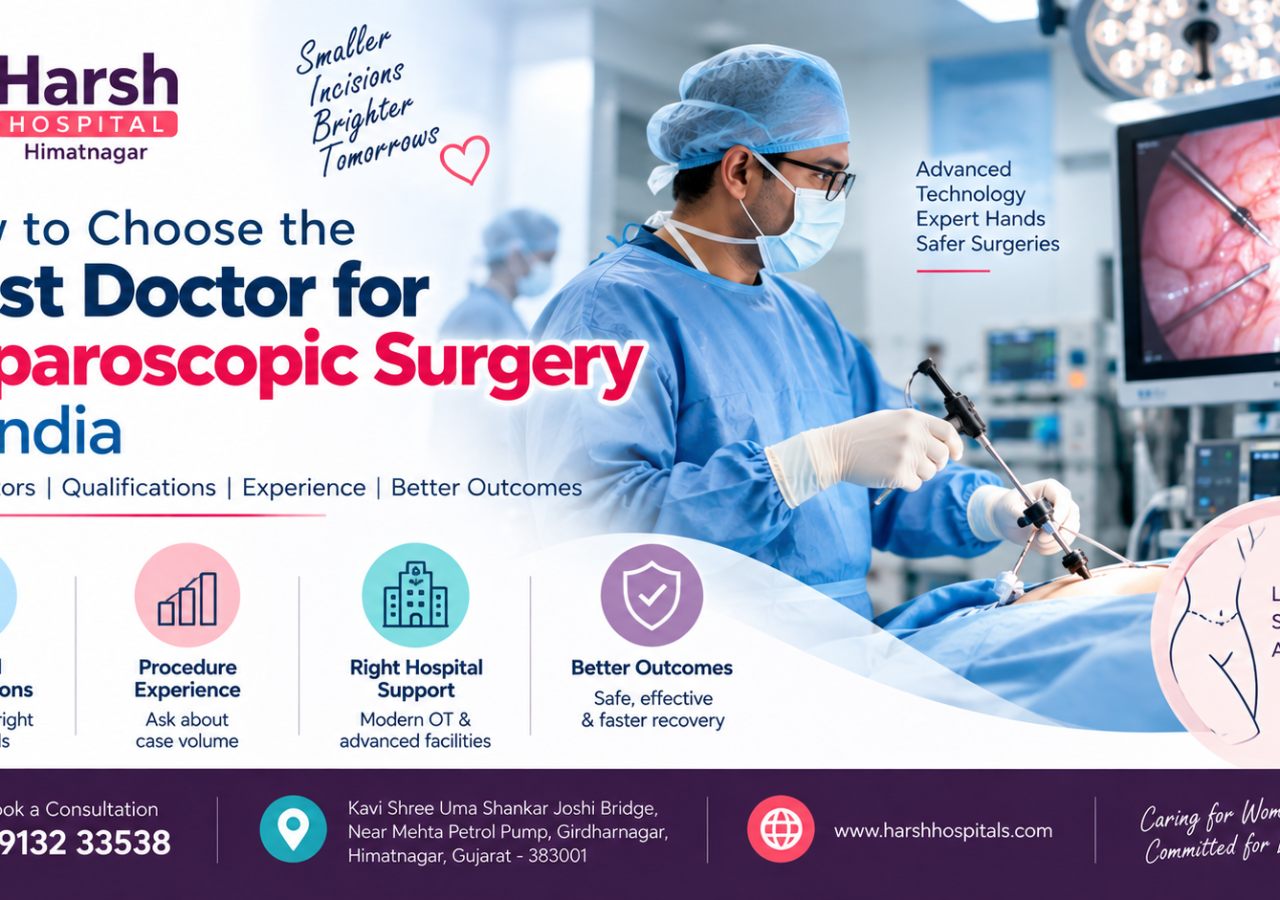
There is no single best doctor for laparoscopic surgery in India. There is a best doctor for your procedure, your anatomy and your risk profile. Judge four things: recognised qualifications, verified registration, case volume in your specific operation, and the hospital team around the surgeon. Everything else is marketing.
That framework is what this guide expands on. Before you compare names, understand what keyhole surgery actually involves, because the questions that identify a good surgeon are procedure-specific rather than general.
What Makes Someone the Best Doctor for Laparoscopic Surgery in India?
Four measurable factors separate a competent minimal access surgeon from an occasional one: formal training in laparoscopy, current registration with a state medical council, annual volume in the procedure you need, and an honest conversion rate.
Formal training in minimal access surgery matters because laparoscopy is a learned motor skill, not an extension of open surgery. The surgeon operates through 0.5 to 1.2 cm ports, watching a two-dimensional screen, with instruments that remove tactile feedback. Someone who performs 5 laparoscopic hysterectomies a year is not doing the same job as an advanced laparoscopic surgeon who performs 150.
Volume is the factor patients most often skip and the one with the clearest link to outcomes across surgical specialties. When you look for the best doctor for laparoscopic surgery in India, ask for numbers in the specific operation, not in laparoscopy generally. A surgeon may be excellent at laparoscopic cholecystectomy and inexperienced in deep endometriosis excision.
Honesty about conversion is the fourth signal. Converting to open surgery mid-procedure is a judgement call, not a failure. A surgeon who says conversion never happens is either inexperienced or not telling you the whole picture.
Credentials to Verify in the Best Doctor for Laparoscopic Surgery in India
Indian medical qualifications are confusing to read, so it helps to know what each abbreviation means before you try to identify the best doctor for laparoscopic surgery in India for your case.
Core Degrees
MBBS is the basic medical degree, and it tells you nothing about whether someone is the best doctor for laparoscopic surgery in India. The postgraduate qualification is what matters. For gynaecological laparoscopy that is MD or MS in Obstetrics and Gynaecology, or DGO followed by further training. For general surgical laparoscopy it is MS in General Surgery or DNB Surgery.
Laparoscopy-Specific Training
FMAS and DMAS denote fellowship and diploma level training in minimal access surgery. FICOG and FRCOG are fellowships of the Indian and UK obstetric colleges respectively. None of these alone makes someone the best doctor for laparoscopic surgery in India, but their absence in a surgeon claiming advanced laparoscopic expertise is worth asking about.
Registration
Every laparoscopic surgeon in India must hold current registration with a State Medical Council, and those registers are searchable. The National Medical Commission maintains the national framework. Verification takes under 10 minutes and is the single most useful check a patient can perform when identifying the best doctor for laparoscopic surgery in India.
Credential Decoder Table
| Credential | What it means | Relevant to |
| MBBS | Basic medical degree | Every doctor |
| MD / MS (Obs & Gyn) | Postgraduate specialist training in women’s health | Gynaecological laparoscopy |
| DGO | Diploma in Obstetrics and Gynaecology | Gynaecological practice |
| MS (General Surgery) / DNB | Postgraduate general surgical training | Abdominal laparoscopy |
| FMAS / DMAS | Fellowship or diploma in minimal access surgery | Laparoscopic skill training |
| FICOG / FRCOG | College fellowship, Indian and UK | Senior gynaecological standing |
| State Medical Council registration | Legal licence to practise | Mandatory for all |
How Do You Check a Laparoscopic Surgeon’s Experience with Your Procedure?
Ask directly, and ask for a number. Most patients feel awkward doing this. Surgeons do not. A reasonable phrasing is: how many of these operations do you personally perform in a year, and what proportion are completed laparoscopically?
Then ask what happens when it is not straightforward. A surgeon looking to be your best doctor for laparoscopic surgery in India should describe a specific plan for a specific complication, not offer reassurance. Bowel, bladder and vascular injuries are recognised risks of keyhole surgery, and the answer should cover how they are identified and managed.
Ask who else is in the theatre. Advanced laparoscopy needs a trained assistant, an anaesthetist experienced with pneumoperitoneum, and a scrub team familiar with the instruments. The Royal College of Obstetricians and Gynaecologists publishes guidance on safe laparoscopic entry that reflects this team-based view.
Finally, ask about follow-up. Who reviews you at 7 days, who you call at 2 am, and whether the operating surgeon or a junior sees you at the post-operative visit.
Does the Hospital Matter as Much as the Surgeon?
Yes, and this is where the search for the best doctor for laparoscopic surgery in India often goes wrong. Even the best doctor for laparoscopic surgery in India is limited by the theatre they work in.
An advanced laparoscopic surgeon needs high-definition laparoscopic stacks, a working insufflator with pressure monitoring, energy devices appropriate to the procedure, and an in-house blood bank or a reliable arrangement with one. Ask whether the hospital can manage an intensive care admission if one becomes necessary.
Accreditation is a useful shortcut. NABH accreditation indicates that documented protocols exist for infection control, consent, and adverse event reporting. It does not guarantee a good outcome, but it raises the floor.
Geography is legitimate too. A surgeon 400 km away is difficult to reach for a post-operative complication at midnight. Many women in North Gujarat reasonably prioritise a competent local team over a well-known name in a distant metro, and that is a sound way to approach how to choose a laparoscopic surgeon.
Questions to Ask the Best Doctor for Laparoscopic Surgery in India
Take this list to every laparoscopic surgery consultation. A surgeon who welcomes these questions is showing you something useful about how they practise.
- What exactly is my diagnosis, and what did you base it on?
- What are my non-surgical options, including doing nothing for now?
- How many of this specific operation do you perform each year?
- What proportion of your cases convert to open surgery?
- Which complications are most likely in my case, and how are they managed?
- Will you personally perform the surgery, start to finish?
- What type of anaesthesia is planned, and who is the anaesthetist?
- How long is the expected hospital stay and return to normal activity?
- What does the total cost include, and what is not included?
- What happens to any tissue removed, and will it be sent for histopathology?
- What is your advice if I want a second opinion?
- Who do I contact after discharge if something feels wrong?
When Laparoscopy Is Not the Right Choice
This section matters more than any list of credentials, because the best doctor for laparoscopic surgery in India will sometimes advise against it. A surgeon who recommends keyhole surgery for every patient is telling you about their preference, not your anatomy.
Understanding how to choose a laparoscopic surgeon includes understanding when they should say no. Open surgery is often safer with a very large uterus or fibroid burden, where working space is limited and blood loss is harder to control. Extensive adhesions from previous abdominal surgery, infection or radiotherapy can make safe port entry difficult. Suspected malignancy may make open surgery preferable so that tissue can be removed intact.
Severe heart or lung disease is a further consideration, because the carbon dioxide used to create working space raises abdominal pressure and affects breathing and circulation. Haemodynamic instability makes laparoscopy unsuitable in emergencies.
There is also the case where no surgery is the right answer. Small asymptomatic fibroids, a simple ovarian cyst under 5 cm in a premenopausal woman, and mild symptoms controlled by medication may all be managed with observation. Be cautious with any surgeon who does not raise this possibility.
Red Flags When Choosing the Best Doctor for Laparoscopic Surgery in India
Guaranteed outcomes are the clearest warning sign. No surgeon can promise a complication-free operation, and regulation in India prohibits advertising that implies it. Claims of being ranked the best doctor for laparoscopic surgery in India on a website with no verifiable source usually reflect paid listings.
Pressure to decide the same day is a second flag, outside genuine emergencies. Fibroids, cysts and endometriosis are rarely urgent enough to prevent a week of consideration.
Refusal to give a written estimate is a third. So is reluctance to share the operative note or discharge summary. You are entitled to your records.
Vagueness about who operates is the fourth. In some hospitals the consultant you meet is not the person holding the instruments. Ask, and ask for the answer in writing if it matters to you.
Getting a Second Opinion Without Offending Anyone
Second opinions are normal practice when you are choosing the best doctor for laparoscopic surgery in India, not a criticism of anyone. Take your imaging, blood results and any previous operative notes to the second laparoscopic surgeon in India you consult, because an opinion based on a verbal summary is of limited value.
If two surgeons disagree, the disagreement itself is informative. Ask each to explain why the other approach might be reasonable. A surgeon who cannot articulate the opposing view has not fully considered it.
At Harsh Hospital in Himatnagar, Dr. Hitesh A. Patel has over 20 years of experience in gynaecology, obstetrics and advanced laparoscopy, and second opinions on gynaecological surgery are a routine part of practice. Reviewing an existing plan is not the same as taking over care, and a second laparoscopic surgery consultation often clarifies more than it complicates.
Understanding Cost Without Being Misled
Costs quoted by any laparoscopic surgeon in India vary widely by city, hospital category and procedure complexity, so a headline figure tells you little. Ask the best doctor for laparoscopic surgery in India you are considering for an itemised estimate covering surgeon’s fee, anaesthesia, theatre charges, consumables, room category and histopathology.
Then ask what is excluded. Extended stay, intensive care, blood products and repeat imaging are the usual omissions. Check whether your insurer needs pre-authorisation and how many days that takes.
Price alone is a poor way to identify the best doctor for laparoscopic surgery in India. An unusually low quote may exclude essentials, and a high one does not indicate skill. What matters is whether the estimate is complete and whether the surgeon explains the variables honestly.
Talking to a Specialist About Your Case
If you have been advised to have a hysterectomy, fibroid removal, ovarian cyst surgery or surgery for endometriosis, bring your reports to a consultation and work through the questions above. You can book an appointment with Harsh Hospital in Himatnagar, or read more about total laparoscopic hysterectomy, ovarian cyst surgery and endometriosis surgery before you decide.
Choosing well is less about finding the best doctor for laparoscopic surgery in India and more about finding a surgeon who explains your options clearly, performs your operation often, and is honest about what could go wrong.
Frequently Asked Questions
How do I verify the best doctor for laparoscopic surgery in India?
Check current registration on the relevant State Medical Council register, which is searchable online and takes under 10 minutes. Confirm the postgraduate degree and any minimal access surgery fellowship. Ask the hospital to confirm the surgeon operates there regularly.
How many procedures should a laparoscopic surgeon perform each year?
There is no universal threshold, and it varies by operation. Ask for the annual number in your specific procedure rather than in laparoscopy overall. Regular, repeated experience in that exact operation matters more than total years in practice. This is central to how to choose a laparoscopic surgeon.
Is a surgeon in a metro city better than one in a smaller town?
Not necessarily. Location matters for follow-up and emergencies, so a competent local team is often the safer choice. Dr. Hitesh A. Patel at Harsh Hospital, Himatnagar, is an advanced laparoscopic surgeon practising within North Gujarat.
What questions should I ask the best doctor for laparoscopic surgery in India?
Ask about your diagnosis, non-surgical alternatives, the surgeon’s annual case numbers, conversion rate, likely complications, who will operate, anaesthesia, expected recovery, total itemised cost, and who to contact after discharge if something feels wrong.
Should I get a second opinion before choosing a laparoscopic surgeon?
Yes, in most non-emergency cases. Take your imaging, blood results and previous operative notes with you. If two surgeons disagree, ask each to explain the reasoning behind the alternative approach before you choose.
Are online rankings of the best doctor for laparoscopic surgery in India reliable?
Usually not. Many listings are paid placements or aggregated from unverified reviews. Use them to build a shortlist at most, then verify registration, qualifications and procedure volume independently before booking a laparoscopic surgery consultation.
Can every gynaecological operation be done laparoscopically?
No. A very large uterus, extensive adhesions, suspected cancer, severe heart or lung disease and emergency instability may all make open surgery safer than minimal access surgery. The best doctor for laparoscopic surgery in India will decline keyhole surgery when it is not the safer option.
Medical Disclaimer
This article is for general information and does not replace individual medical advice. Surgical decisions depend on your diagnosis, imaging, medical history and examination findings. Please consult a qualified gynaecologist or surgeon about your own situation.