
August 25, 2026 · laparoscopic surgery
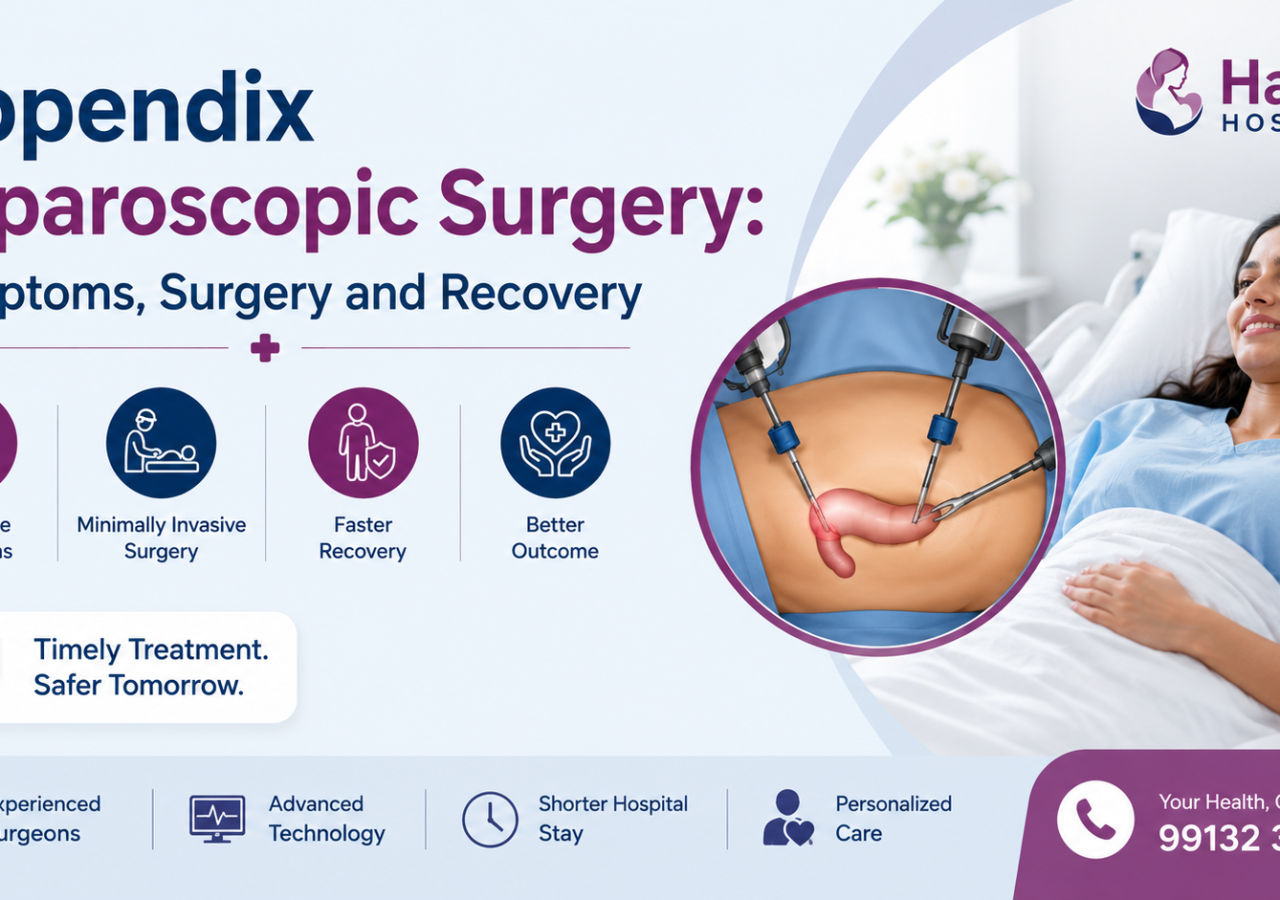
Appendix laparoscopic surgery is a minimally invasive operation used to remove an inflamed or infected appendix, usually when appendicitis is diagnosed. It uses a camera and specialised instruments through small abdominal incisions. For patients and families, understanding appendicitis symptoms, diagnosis, treatment choices, recovery and warning signs can make an urgent surgical situation easier to understand. The appropriate treatment always depends on clinical assessment rather than symptoms alone.
What Is Appendicitis?
Appendicitis occurs when the appendix becomes inflamed and infected. The appendix is a small, finger-shaped pouch connected to the large intestine, generally located in the lower-right abdomen. Although the appendix can be removed without affecting normal digestion, inflammation may become serious if it progresses without appropriate treatment.
The pattern of symptoms is not identical in every patient. Pain commonly begins around the navel and may later move toward the lower-right abdomen. Nausea, vomiting, reduced appetite and fever can also occur.
According to the NHS, appendicitis requires urgent medical assessment because an untreated appendix can rupture and cause infection inside the abdomen. ICMR guidelines for appendicitis explains the common symptoms, diagnostic process, treatment options and possible complications.
Common Symptoms
Recognising appendicitis symptoms can help patients understand when medical assessment may be necessary. However, these symptoms can also occur with other abdominal conditions.
Common features include:
- Abdominal pain that progressively worsens or moves toward the lower-right abdomen
- Nausea, vomiting, loss of appetite or fever
- Abdominal tenderness that becomes worse with movement, coughing or pressure
Constipation, diarrhoea or urinary symptoms may also occur. In children, older adults and pregnant women, the presentation can sometimes be less typical.
A patient should not attempt to confirm appendicitis independently because urinary disorders, kidney stones, bowel conditions and certain gynecological problems can produce similar symptoms.
When Is Appendicitis an Emergency?
Appendicitis can become an emergency when inflammation progresses to perforation, an abscess or infection of the abdominal lining. A perforated appendix can require urgent treatment, including surgery and antibiotics.
Emergency surgery is not automatically required for every patient with abdominal pain. The surgical team first considers the history, physical examination, laboratory results and imaging findings.
Patients should seek prompt medical assessment when abdominal pain is persistent or progressively worsening, particularly when it occurs with fever, vomiting or significant tenderness.
Warning Signs
Important warning signs include:
- Severe or rapidly worsening abdominal pain
- Fever associated with increasing abdominal tenderness
- Repeated vomiting or inability to drink fluids
- Severe weakness, fainting, confusion or breathing difficulty
The presence of these symptoms does not establish a diagnosis, but they should not be ignored.
What Is Appendix Laparoscopic Surgery?
Appendix laparoscopic surgery, also known as laparoscopic appendectomy or laparoscopic appendicectomy, is a keyhole operation for removing the appendix.
The procedure is generally performed under general anaesthesia. Instead of making one large abdominal incision, the surgeon uses small access points to introduce a laparoscope and surgical instruments.
During appendix laparoscopic surgery, the camera provides a magnified view of the abdominal cavity. The surgeon identifies the appendix, separates it from surrounding tissues, controls its blood supply and removes it through an appropriate access point.
How the Procedure Is Performed
The main stages generally include:
- Preoperative assessment and preparation for anaesthesia.
- Creation of small abdominal access points.
- Introduction of the camera and laparoscopic instruments.
- Identification and mobilisation of the appendix.
- Secure division of the appendix and its blood supply.
- Removal of the appendix.
- Inspection of the surrounding area for infection, pus or contamination.
- Closure of the abdominal incisions.
The exact technique varies according to anatomy, inflammation, previous abdominal surgery and operative findings.
Who May Be Suitable for Laparoscopic Appendectomy?
Many patients with uncomplicated appendicitis can be considered for laparoscopic appendectomy. However, suitability is determined individually.
The surgeon may consider whether the appendix is inflamed, gangrenous or perforated, whether an abscess is present and whether previous abdominal operations have caused adhesions.
In selected cases of uncomplicated appendicitis, antibiotics may be considered instead of immediate surgery. This approach is not suitable for every patient and appendicitis can recur when the appendix remains in place.
When surgery is recommended, appendix laparoscopic surgery may be chosen when the surgeon considers it an appropriate and safe approach.
Laparoscopic Versus Open Appendectomy
Both laparoscopic and open appendectomy are established surgical approaches. The choice depends on the patient’s clinical condition and operative findings.
| Factor | Laparoscopic Appendectomy | Open Appendectomy |
| Surgical access | Several small incisions | Usually one larger incision |
| Visualization | Camera-assisted internal view | Direct surgical access |
| Incision size | Generally smaller | Generally larger |
| Recovery | Often quicker in suitable cases | May require longer recovery |
| Scarring | Usually smaller scars | Usually a larger scar |
| Complicated disease | Can be appropriate in selected cases | May be preferred in selected situations |
| Final decision | Based on individual clinical findings | Based on individual clinical findings |
A laparoscopic procedure may occasionally need to be converted to open surgery when safe visualization or dissection cannot be achieved. This is a safety decision made during the operation.
Benefits of Minimally Invasive Treatment
When clinically appropriate, appendix laparoscopic surgery may offer advantages associated with smaller abdominal incisions. These may include less abdominal wall disruption and earlier mobility in suitable patients.
Potential advantages include:
- Smaller surgical wounds
- Less disruption of the abdominal wall
- Potentially earlier return to routine mobility
- Smaller visible scars
These advantages should not be interpreted as a guarantee of faster recovery. Patients with perforation, abscess or extensive infection may have a more prolonged recovery regardless of the surgical approach.
Laparoscopic Appendectomy Recovery
Laparoscopic appendectomy recovery depends on the severity of appendicitis, the patient’s general health and whether complications were present.
Following appendix laparoscopic surgery, patients are monitored while recovering from anaesthesia. Pain relief is provided, and fluids and food are introduced according to the patient’s clinical condition.
Mild abdominal discomfort, incision tenderness and temporary bloating can occur during the early recovery period. These symptoms should generally improve progressively.
Recovery at Home
After discharge, patients should follow the instructions provided by their surgical team.
Important recovery measures include:
- Keep wounds clean and follow dressing instructions.
- Take prescribed medicines as directed.
- Walk gradually and increase activity according to medical advice.
- Avoid strenuous exercise and heavy lifting until medically cleared.
Many uncomplicated patients can return gradually to normal activities within a relatively short period, while recovery may take longer after perforation or significant infection.
Driving, physically demanding work and strenuous exercise should be resumed only when the patient can perform these activities safely and has received appropriate medical guidance.
Possible Complications
Like all surgical procedures, appendix laparoscopic surgery has potential risks. These risks can be influenced by the severity of appendicitis and the patient’s overall health.
Possible complications include wound infection, bleeding, intra-abdominal infection, abscess formation, injury to nearby structures and anaesthesia-related complications. Adhesions and bowel-related complications can occur less commonly.
Complicated appendicitis may require antibiotics, drainage, longer hospital observation or additional surgery.
Patients should contact their healthcare team if pain is worsening instead of improving, fever develops or the wound becomes increasingly red, swollen or discharging.
Advanced Laparoscopic Surgery and Surgical Expertise
Advanced laparoscopic surgery requires appropriate equipment, trained surgical professionals and the ability to modify the surgical plan according to operative findings.
The quality of surgical care should not be judged only by incision size. Safe patient selection, appropriate anaesthesia, infection management, surgical decision-making and postoperative monitoring are equally important.
Patients considering advanced laparoscopic surgery should ask about the surgeon’s qualifications, hospital facilities, emergency support and postoperative care.
Choosing a Laparoscopic Facility in Himatnagar
Patients searching for laparoscopic surgery in Himatnagar should consider the complete surgical-care pathway rather than focusing only on the procedure itself.
Important factors include appropriate diagnostic facilities, trained surgical staff, anaesthesia support, operating-room infrastructure and postoperative monitoring.
A surgical hospital in Himatnagar can evaluate the patient’s symptoms and determine whether laparoscopic treatment is appropriate.
Harsh Hospital in Himatnagar, Sabarkantha, Gujarat, provides multispecialty healthcare and surgical services. Patients with suspected appendicitis can receive clinical evaluation before the surgical approach is selected.
Patients travelling from nearby areas may also explore options for laparoscopic surgery near Malpur. Those searching for a laparoscopic surgeon near Meghraj should consider specialist expertise together with hospital infrastructure and emergency support.
Understanding Laparoscopic Surgery Cost
The cost of appendix surgery can vary because the treatment required differs from one patient to another.
Factors that may contribute to the overall cost include diagnostic investigations, imaging, surgeon and anaesthesia charges, operating-room expenses, medicines, consumables and hospital stay.
Patients looking for a laparoscopic surgery cost guide should understand that an online figure cannot replace an individual estimate. A patient’s final cost can change if perforation, abscess or another complication requires additional treatment.
Insurance coverage and cashless eligibility may also affect the patient’s financial responsibility. Patients should clarify applicable policy terms with the hospital and insurer.
Appendix Laparoscopic Surgery at Harsh Hospital
At Harsh Hospital, patients presenting with suspected appendicitis can undergo clinical assessment to determine the appropriate treatment pathway.
Where appendix laparoscopic surgery is clinically appropriate, the surgical team can explain the procedure, expected recovery and potential risks. If complicated infection, perforation or difficult anatomy is identified, another surgical approach may be recommended.
The objective is to provide treatment based on clinical need rather than selecting a technique solely because it is minimally invasive.
Seek Timely Surgical Evaluation
Persistent or worsening abdominal pain deserves medical attention, particularly when accompanied by fever, vomiting or increasing tenderness.
If you are considering appendix laparoscopic surgery in Himatnagar, consult a qualified surgical team for appropriate evaluation. A surgeon can determine whether the symptoms are consistent with appendicitis and explain the available treatment options.
Early professional assessment can help distinguish appendicitis from other causes of abdominal pain and determine whether observation, antibiotics or surgery is appropriate.
About Harsh Hospital
Harsh Hospital is a multispecialty healthcare facility in Himatnagar, Sabarkantha, Gujarat. The hospital provides surgical and laparoscopic services supported by clinical, nursing, anaesthesia and postoperative-care teams.
For suspected appendicitis, treatment is determined after individual assessment of the patient’s symptoms, investigations and clinical condition.
Frequently Asked Questions
- What is appendix laparoscopic surgery?
Appendix laparoscopic surgery is a minimally invasive operation used to remove an inflamed or infected appendix. It is performed under general anaesthesia using a camera and specialised instruments through small abdominal incisions.
- What are the main appendicitis symptoms?
Common symptoms include abdominal pain, nausea, vomiting, loss of appetite and fever. Pain may begin around the navel and move toward the lower-right abdomen, although symptoms can vary.
- Is appendix laparoscopic surgery always possible?
No. Severe inflammation, perforation, abscess formation, difficult anatomy or other operative findings may make open surgery or another treatment approach more appropriate.
- How long does laparoscopic appendectomy recovery take?
Recovery varies according to the severity of disease and the patient’s general health. Uncomplicated cases generally recover sooner than cases involving perforation or significant abdominal infection.
- Is laparoscopic appendectomy better than open surgery?
Laparoscopic surgery may provide smaller incisions and potentially faster recovery in appropriate patients. However, open surgery may be safer in selected complicated cases.
- Can appendicitis be treated without surgery?
Some selected patients with uncomplicated appendicitis may be treated with antibiotics. This approach is not suitable for everyone, and recurrence can occur, so treatment requires medical assessment.
- When is emergency surgery needed?
Emergency treatment may be necessary when appendicitis is strongly suspected, particularly when there are signs of perforation, spreading infection or clinical deterioration. Severe or worsening abdominal pain requires prompt evaluation.
- What should patients do after appendix surgery?
Patients should follow their surgeon’s instructions regarding wound care, medicines, activity and follow-up. Increasing pain, fever, wound discharge, repeated vomiting or significant deterioration should be reported promptly.
Conclusion
Appendix laparoscopic surgery is an established minimally invasive approach for removing an inflamed appendix when it is clinically appropriate. Recognising symptoms, obtaining timely diagnosis and understanding treatment options can help patients approach surgical care with greater confidence.
The recovery period depends on the severity of appendicitis and whether complications such as perforation, abscess or abdominal infection are present. Although laparoscopic treatment can provide smaller incisions and recovery advantages for suitable patients, the safest approach must always be determined by the clinical situation.
For patients in Himatnagar and surrounding areas, Harsh Hospital provides surgical evaluation and laparoscopic services based on individual patient requirements. Patients experiencing persistent or worsening abdominal pain should seek professional medical assessment rather than attempting self-diagnosis.