
July 13, 2026 · women's hospital
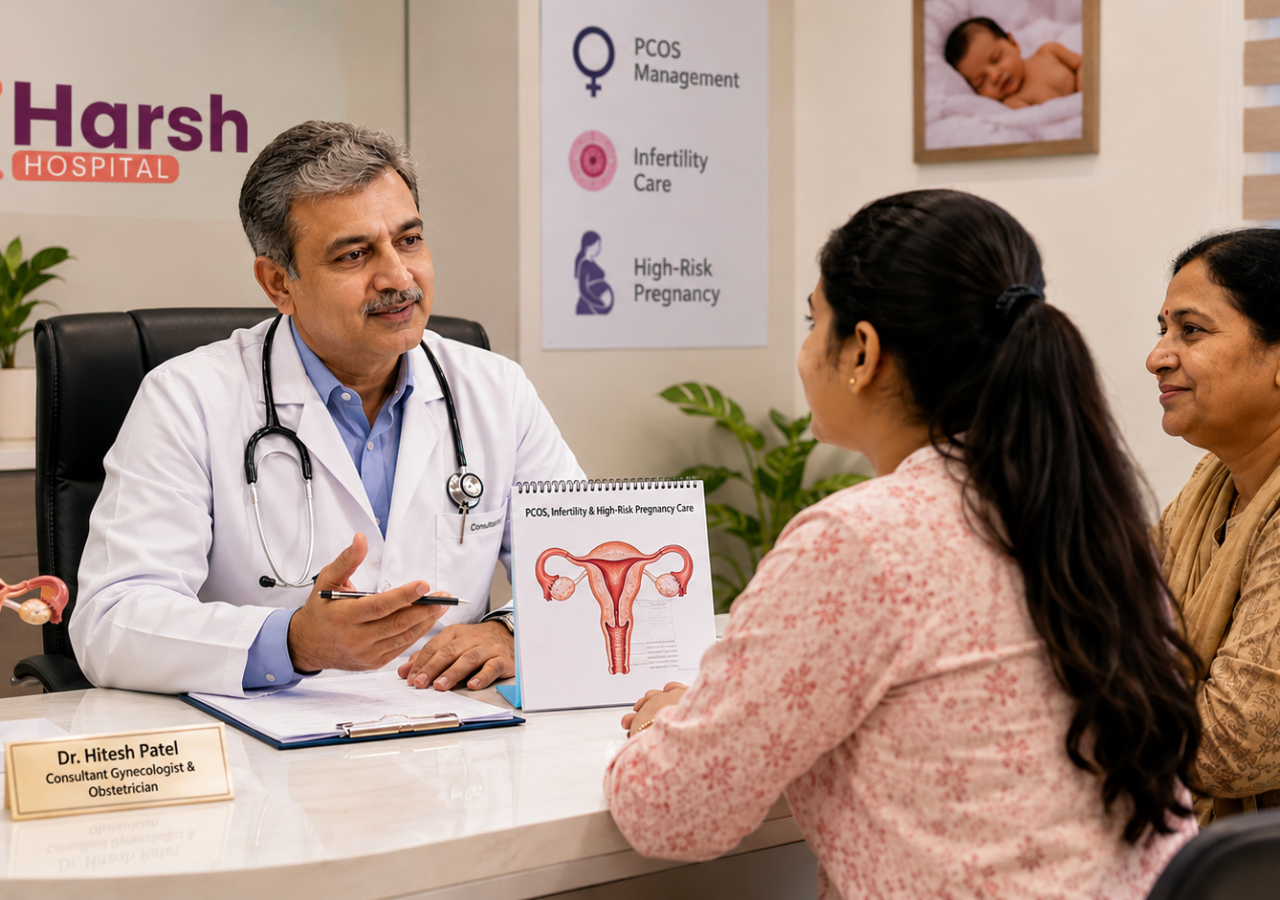
Finding the best gynecologist in Himatnagar becomes urgent the moment you are dealing with PCOS, struggling to conceive, or facing a high-risk pregnancy. General advice from friends or forums only goes so far in these situations. You need a doctor who has actually handled hundreds of similar cases and knows exactly when to act. This guide explains what to look for in a best gynecologist in Himatnagar and how PCOS, infertility, and high-risk pregnancy care connect to each other.
Quick Answer: The best gynecologist in Himatnagar for PCOS, infertility, and high-risk pregnancy combines years of clinical experience with modern diagnostic tools, a patient-first approach, and a strong track record of successful outcomes. Dr. Hitesh Patel at Harsh Hospital brings over 20 years of experience across all three areas.
Introduction
Why women in Himatnagar need a trusted gynecologist
Reproductive health issues rarely announce themselves clearly. Irregular periods might feel like a minor inconvenience for months before someone finally connects them to PCOS. A trusted gynecologist notices patterns that a general physician might miss, and that difference often decides how quickly a woman gets the right treatment.
The link between PCOS, infertility, and high-risk pregnancy care
These three concerns are more connected than most people realise. PCOS is one of the leading causes of infertility in Indian women. Once a woman with PCOS does conceive, her pregnancy often needs closer monitoring, which places her in the high-risk category. The relationship between PCOS and pregnancy is exactly why continuity of care matters so much. So, the same specialist who manages PCOS frequently ends up guiding the pregnancy that follows, rather than handing the patient off to someone unfamiliar with her history.
What Makes a Gynecologist the “Best” in Himatnagar?
“Best” is a word people use loosely, but a few concrete factors actually separate an excellent gynecologist from an average one. When families in the region search for the best gynecologist in Himatnagar, they are usually looking for exactly these markers, whether they realise it or not.
Years of experience and successful patient outcomes
Experience is not just about the number of years in practice. It is about the range of cases handled. A gynecologist who has managed complex PCOS cases, recurrent miscarriages, and high-risk deliveries brings a depth of judgment that no textbook alone can teach.
Expertise in PCOS, infertility, and high-risk pregnancies
Look specifically for a doctor whose practice regularly includes these three areas together, rather than someone who treats them as occasional cases. This combination matters because the same patient often moves through all three stages over a few years.
Use of modern diagnostic tools and treatment methods
Ultrasound quality, hormonal testing accuracy, and access to advanced monitoring during pregnancy all affect outcomes. Ask whether the hospital keeps its diagnostic equipment updated, since outdated machines can miss early warning signs.
Patient-first approach and compassionate care
Fertility struggles and high-risk pregnancies are emotionally exhausting. A good gynecologist takes time to explain options clearly, answers questions without rushing, and treats each consultation as more than a five-minute formality.
Strong local reputation and verified patient reviews
Ask around. Families in Himatnagar talk, and a gynecologist who consistently delivers good outcomes tends to have a strong, verifiable reputation across the local community, not just polished testimonials on a website. This word-of-mouth trust is often the clearest sign you have found the best gynecologist in Himatnagar for your specific needs, more reliable than any advertisement could be.
Understanding PCOS and Pregnancy
What is PCOS and how common is it among Indian women?
Polycystic Ovary Syndrome, or PCOS, is a hormonal condition that affects roughly one in five Indian women during their reproductive years. It disrupts ovulation and often causes irregular periods, acne, weight gain, and excess hair growth.
How PCOS affects ovulation and fertility
PCOS interferes with the regular release of eggs from the ovaries. Without predictable ovulation, timing conception naturally becomes far more difficult, which is why PCOS ranks among the top causes of female infertility.
Can women with PCOS get pregnant naturally?
Yes, many women with PCOS conceive naturally, especially with the right lifestyle changes and medical support to regulate ovulation. It usually takes longer and needs more monitoring, but natural conception remains realistic for a large number of PCOS patients.
Medical and lifestyle treatments for PCOS-related infertility
Treatment typically starts with weight management and dietary changes, followed by ovulation-inducing medication if needed. A specialist gynecologist tailors this approach based on hormone levels, weight, and how long the couple has been trying to conceive.
How a gynecologist monitors PCOS during pregnancy
Once pregnancy is confirmed, women with PCOS need closer monitoring for gestational diabetes and blood pressure issues, since PCOS increases the risk of both. Regular scans and blood work help catch these complications early. Understanding the link between PCOS and pregnancy from the very first trimester allows the gynecologist to plan a monitoring schedule around known risk factors instead of reacting after a problem shows up.
Doctors experienced in managing PCOS and pregnancy together often recommend earlier glucose tolerance testing and closer blood pressure tracking than they would for a low-risk pregnancy. This proactive approach is exactly what reduces complications later in the third trimester.
Signs of Infertility in Women You Should Not Ignore
Recognising the signs of infertility in women early can save months, sometimes years, of uncertainty.
- Irregular or absent periods for several months
- Painful periods or severe pelvic pain during the cycle
- Two or more consecutive miscarriages
- Sudden acne, excess facial hair, or unexplained weight gain
- No pregnancy after twelve months of trying, or six months if the woman is over 35
Irregular or absent periods
Cycles that are unpredictable in length, or periods that stop altogether without pregnancy or menopause, are among the clearest signs of infertility in women and deserve prompt evaluation.
Painful periods or severe pelvic pain
While mild cramping is common, severe pain that disrupts daily activities could point toward endometriosis or fibroids, both of which can affect fertility if left untreated.
Repeated miscarriages
One miscarriage does not always indicate a deeper problem. However, two or more in a row is one of the clearer signs of infertility in women that warrants a detailed fertility workup.
Hormonal changes like acne, hair loss, or weight gain
These symptoms often trace back to PCOS or thyroid imbalance, both of which interfere with regular ovulation and reduce the chances of natural conception.
When to see a fertility specialist
If you notice any combination of these signs, do not wait out the full twelve-month window before seeking help, especially if you are over 30. Earlier evaluation simply gives you more treatment options.
Infertility Evaluation: What to Expect
Initial consultation and medical history review
The first visit usually involves a detailed discussion about your cycle history, past pregnancies, lifestyle, and any relevant family history. This context shapes which tests come next. The best gynecologist in Himatnagar will spend real time on this step instead of jumping straight to tests without understanding your background first.
Common fertility tests for women
Typical tests include hormone panels, a pelvic ultrasound to check the ovaries and uterus, and sometimes a tube-patency test to confirm the fallopian tubes are open and functioning.
Treatment options: ovulation induction, IUI, IVF guidance
Depending on the cause identified, treatment may start with ovulation induction medication, progress to intrauterine insemination (IUI), or move toward IVF guidance for more complex cases. A good gynecologist explains each step before recommending it.
Emotional support during the fertility journey
Fertility treatment can feel overwhelming. A compassionate care team acknowledges this and paces the conversation accordingly, instead of just moving from one test to the next without context.
High-Risk Pregnancy: Why Specialist Care Matters
What makes a pregnancy “high-risk”?
A pregnancy is considered high-risk when the mother or baby faces a higher-than-average chance of complications, due to factors like existing health conditions, age, or pregnancy-specific issues that develop along the way.
Common high-risk conditions: diabetes, hypertension, thyroid, twins
Gestational diabetes, high blood pressure, thyroid imbalance, and multiple pregnancies (twins or more) are among the most common reasons a pregnancy gets classified as high-risk in Indian hospitals. Age plays a role too. Women under 19 and women over 35 both fall into a higher-risk bracket, simply because both groups statistically face more complications during pregnancy and delivery. A history of previous miscarriage or a prior C-section can also shift a pregnancy into this category, which is why your obstetrician always reviews your full medical history before labelling a pregnancy low-risk or high-risk.
How a specialist reduces risks for mother and baby
A specialist trained in high-risk pregnancy care schedules more frequent monitoring, adjusts medication carefully, and watches for early warning signs that a general checkup schedule might miss. This is precisely the kind of vigilance that defines the best gynecologist in Himatnagar for complex pregnancy cases.
Delivery planning in high-risk pregnancies
High-risk pregnancies often need a more detailed delivery plan, including decisions about the safest delivery method and timing, made well before the due date rather than during labour itself.
Dr. Hitesh Patel: Trusted Gynecologist in Himatnagar
20+ years of experience in gynecology and obstetrics
With more than two decades of practice, Dr. Hitesh Patel has guided thousands of women in Himatnagar and North Gujarat through routine and complex gynecological care alike. Patients often describe him as the best gynecologist in Himatnagar not just for his clinical skill, but for how clearly he explains each decision along the way.
Advanced laparoscopic surgery expertise
Beyond consultations, Dr. Patel brings hands-on expertise in advanced laparoscopic procedures, often used to diagnose and treat conditions like endometriosis, fibroids, and certain causes of infertility.
Personalized care for PCOS, infertility, and complex pregnancies
Every patient’s treatment plan is built around her specific hormone profile, history, and goals, rather than a generic protocol applied to everyone equally.
Thousands of successful patient stories from Himatnagar and North Gujarat
Over the years, this personalised approach has translated into thousands of successful outcomes, from PCOS management to safe high-risk deliveries.
Patient Success Stories
Real experience: PCOS to pregnancy
Many women arrive with years of irregular cycles and little hope of natural conception. With consistent PCOS management, including lifestyle guidance and, where needed, ovulation support, a meaningful number go on to conceive naturally within a year or two of starting treatment.
Real experience: safe high-risk delivery
Mothers with conditions like gestational diabetes or twin pregnancies often arrive anxious about delivery outcomes. Close monitoring throughout the pregnancy, combined with a clear delivery plan, has helped many of these high-risk cases end in safe, uneventful deliveries.
Real experience: overcoming infertility
For couples dealing with unexplained infertility, a structured evaluation followed by step-by-step treatment, starting with the least invasive option first, has helped many finally achieve a successful pregnancy after years of uncertainty.
How to Book an Appointment With the Best Gynecologist in Himatnagar
Call, WhatsApp, or online appointment options
Booking should not add stress to an already stressful situation. You can call the hospital directly, send a WhatsApp message, or book an appointment online with the best gynecologist in Himatnagar in just a few minutes. Most first-time patients get a slot within a day or two, and urgent cases involving pregnancy complications are usually accommodated the same day.
What to bring to your first visit
Carry any previous test reports, ultrasound scans, a note of your menstrual cycle history, and a list of current medications. This helps the doctor build an accurate picture from the very first consultation.
Conclusion
Your health deserves expert, compassionate care
Whether you are dealing with PCOS, struggling with infertility, or navigating a high-risk pregnancy, the right gynecologist changes the entire experience. It is not just about medical expertise, though that matters enormously. It is also about feeling heard, informed, and supported at every step. If you have been searching for the best gynecologist in Himatnagar, do not settle for guesswork when your reproductive health is involved. The right specialist today can save months of confusion and worry later, so take that first step sooner rather than later. You can also read our guide on choosing the right maternity hospital in Himatnagar if delivery planning is your next concern, or learn more about full body checkups for women to catch related hormonal issues early.
Schedule your consultation at Harsh Hospital today
Take the first step today. Schedule your consultation at Harsh Hospital and get a clear, honest treatment plan from a team that has guided thousands of women through exactly what you are facing now.
Frequently Asked Questions
1. Who is considered the best gynecologist in Himatnagar for PCOS?
Dr. Hitesh Patel at Harsh Hospital is widely regarded as the best gynecologist in Himatnagar for PCOS, with over 20 years of experience managing hormonal and fertility-related conditions.
2. Can PCOS be treated without medication?
Mild PCOS often improves with weight management, diet changes, and regular exercise. Medication becomes necessary when lifestyle changes alone do not restore regular ovulation.
3. What are the earliest signs of infertility in women?
Irregular or absent periods, repeated miscarriages, and no pregnancy after twelve months of trying are among the earliest signs of infertility in women.
4. Is IVF the only option for infertility treatment?
No, IVF is usually considered after simpler treatments like ovulation induction or IUI have been tried, unless the specific diagnosis calls for IVF directly.
5. What conditions make a pregnancy high-risk?
Gestational diabetes, hypertension, thyroid disorders, twin pregnancies, and advanced maternal age are among the most common factors that classify a pregnancy as high-risk.
6. Can a woman with PCOS have a normal, healthy pregnancy?
Yes, with proper monitoring for gestational diabetes and blood pressure, most women with PCOS go on to have healthy pregnancies and deliveries.
7. How soon should I see a gynecologist if I suspect infertility?
If you are under 35, seek evaluation after twelve months of trying. If you are over 35, six months of trying without success is a reasonable point to seek specialist advice.
8. Does Harsh Hospital handle both infertility treatment and high-risk pregnancy care?
Yes, Harsh Hospital provides continuous care from PCOS and infertility evaluation through to high-risk pregnancy monitoring and safe delivery, under the same experienced team.
9. What should I look for besides experience when choosing a gynecologist?
Beyond experience, look at how clearly the doctor communicates, how quickly the clinic responds to questions, and whether the hospital offers full diagnostic support on-site.
10. Does PCOS come back after successful treatment or pregnancy?
PCOS is a long-term hormonal condition, so symptoms can return if lifestyle habits slip after treatment or after pregnancy. Regular follow-up helps manage it over the long run rather than treating it as a one-time fix.