
July 2, 2026 · PCOS / PCOD Treatment
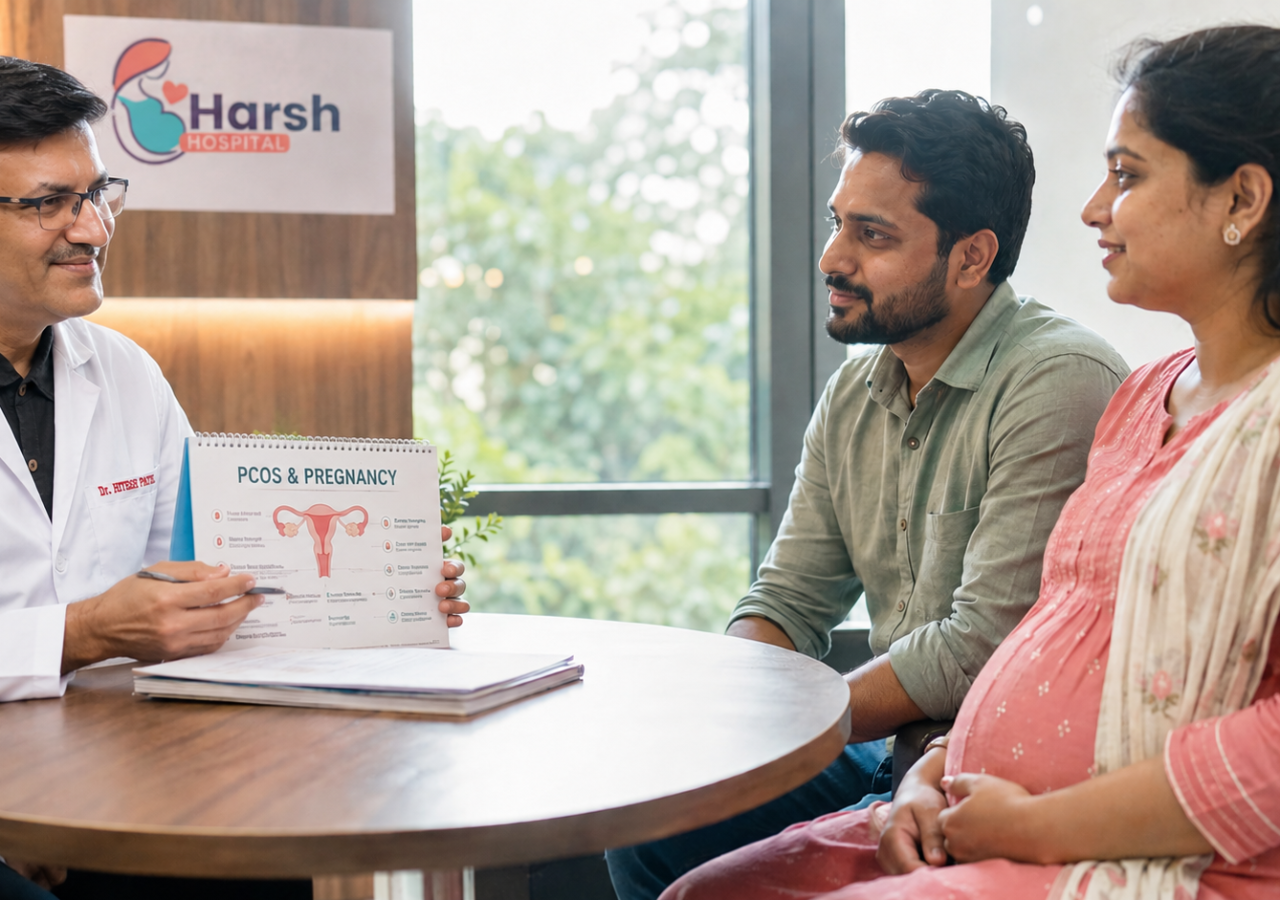
If you live with polycystic ovary syndrome and you dream of starting a family, here is the honest, reassuring truth: PCOS and Pregnancy can go hand in hand. Thousands of women with this condition conceive and deliver healthy babies every single year. Yes, PCOS can make the path less predictable. Ovulation may arrive late or skip a month, and a few health risks rise once you are expecting. Even so, almost all of these hurdles respond well to the right plan. At Harsh Hospitals, our team supports women across Gujarat from the first positive test to a safe birth. You can read about our fertility and IVF care to see how we help couples turn this dream into reality.
| Quick Answer
Can you get pregnant with PCOS? Yes. PCOS is one of the most common – and most treatable – reasons for irregular ovulation. With steady lifestyle changes, ovulation-support medicines, and regular monitoring, a large share of women conceive within one to two years. |
What PCOS Really Does Inside Your Body
PCOS stands for polycystic ovary syndrome. In plain terms, the hormones that control your monthly cycle slip out of balance. Your ovaries may carry many tiny follicles, yet they struggle to release a mature egg each month. That single problem – irregular or missing ovulation – sits at the heart of most fertility trouble linked to this condition.
Insulin also plays a quiet role. Many women with PCOS have insulin resistance, which means the body makes extra insulin to keep blood sugar steady. High insulin then pushes the ovaries to produce more male-type hormones, and that worsens the cycle problems. So when doctors talk about controlling PCOS, they usually start with insulin and weight, because fixing those two things tends to wake the ovaries back up.
Signs Your PCOS Might Be Affecting Fertility
Some women learn they have PCOS only after they struggle to conceive. So it helps to know the early clues. Watch for these common signs, and mention them to your doctor:
- Irregular or missing periods. Cycles longer than 35 days, or fewer than eight periods a year, often point to ovulation problems.
- Trouble predicting your fertile window. If ovulation kits rarely turn positive, your body may not be releasing an egg each month.
- Extra hair growth or stubborn acne. These hint at higher male-type hormones, a common PCOS marker.
- Weight that climbs easily around the middle. This often links back to insulin resistance.
Take Priya, a 29-year-old patient from a town near Himatnagar. She had irregular periods for years but assumed it was normal. After six months of trying for a baby, a simple scan and blood test confirmed PCOS. Within four months of diet changes and a short course of ovulation medicine, she conceived. Her story is common, and it shows why early checking pays off.
How PCOS and Pregnancy Influence Each Other
When it comes to PCOS and Pregnancy, the relationship runs both ways. The condition can make conceiving harder, and once you are pregnant it asks for a little extra watching. The good news? Your team can spot and manage every one of these issues early.
Before the two lines appear
The biggest hurdle before conception is timing. If you ovulate only a few times a year, your chances to conceive each month shrink. This is why tracking matters so much. A small group of women also carry a slightly higher risk of early miscarriage, often tied to insulin and hormone levels. Get those under control first, and the odds clearly improve.
Through the nine months
Once you conceive, a few risks deserve attention. None of them should scare you, because regular checks catch them early. The table below breaks down the main ones and what helps.
| Possible risk | Why it happens | What helps |
| Gestational diabetes | Insulin resistance from PCOS | Early sugar testing, balanced meals, light activity |
| High blood pressure | Hormonal and metabolic strain | Regular BP checks, low-salt diet, monitoring |
| Larger-than-average baby | Higher maternal blood sugar | Controlled diet, steady blood sugar tracking |
| Preterm or assisted birth | Linked to the factors above | Close antenatal care, planned delivery |
If any of these show up, an experienced high-risk pregnancy team can step in quickly. So the aim is simple: prepare well, then watch closely.
PCOS Natural Treatment That Quietly Boosts Fertility
Before any prescription, most doctors push lifestyle first – and for good reason. A practical pcos natural treatment plan often does more than any single pill. Even a five to ten percent drop in body weight can restart regular ovulation for many women. Here is what tends to work in real life:
- Eat to steady your sugar. Fill half your plate with vegetables, add protein and whole grains, and cut sugary drinks. This is the backbone of pcos natural treatment.
- Move most days. A brisk 30-minute walk, light strength work, or yoga improves how your body uses insulin.
- Protect your sleep. Poor sleep raises stress hormones that worsen PCOS. Aim for seven to eight steady hours.
- Consider inositol. Many women find this supplement helps their cycles, but ask your doctor before starting.
- Manage stress. Daily breathing, prayer, or a short wind-down routine lowers cortisol and supports hormone balance.
None of this is magic, and results take a few months. Still, a calm, consistent pcos natural treatment routine gives every medical step a stronger base to build on. For meal ideas, our blog post on a PCOS-friendly diet plan is a good place to start.
Medical Help When Your Body Needs a Push
When lifestyle alone is not enough, modern fertility care steps in. Doctors usually move through these stages, gently and in order:
- Track and confirm ovulation. Blood tests, scans, and a simple cycle diary show whether and when you ovulate.
- Treat insulin first. Metformin often improves cycles and lowers pregnancy risks for women with insulin resistance.
- Start ovulation medicines. Letrozole or clomiphene gently coax the ovaries to release an egg, and they help many women conceive at home.
- Add a small procedure if needed. Intrauterine insemination (IUI) places healthy sperm close to the egg at the right moment.
- Move to IVF when required. In-vitro fertilisation offers a strong path when other steps do not work or when added factors are present.
Most couples never reach the final step. In fact, many conceive within the first two or three stages once their cycles steady. You can explore the full range of choices on our infertility treatment page.
What happens at your first fertility visit
A first visit is calmer than most people fear. Your doctor will ask about your periods, weight, and family history. Next comes a quick scan to look at your ovaries, plus blood tests for hormones and blood sugar. After that, you get a clear plan with realistic timelines. Bring your partner if you can, since some tests involve both of you. You usually leave the clinic with a written next step, not a vague promise.
Choosing the Right PCOS Treatment in Gujarat
Where you get care shapes your whole experience. Good pcos treatment in gujarat blends three things: an experienced gynaecologist, an in-house lab and ultrasound, and a maternity unit ready for delivery. When all of that sits under one roof, you save time, money, and a lot of worry.
At Harsh Hospitals, women find complete pcos treatment in gujarat – from the first diagnosis to fertility support and safe childbirth. Because our team also runs a high-risk pregnancy unit, expert help is already in the building if any complication appears. Families across Sabarkantha and nearby districts choose us for exactly this reason: care never stops between departments.
| Book a Consultation
Thinking about starting your family? Book a consultation with our fertility specialists and get a clear, personal plan built around your PCOS and Pregnancy journey. |
Caring for PCOS Through Each Trimester
Your needs shift as the months pass, so your care plan should shift too. Here is a simple month-by-month guide.
First trimester
Focus on stable blood sugar and steady weight. Your doctor may continue metformin if you were already on it, and folic acid becomes essential. Mild nausea is normal, so eat small, frequent meals to avoid sugar dips.
Second trimester
This is usually the calmest stretch. Around weeks 24 to 28, expect a glucose test, because PCOS raises the chance of gestational diabetes. Keep moving with gentle walks, and track any swelling or headaches that could signal rising blood pressure.
Third trimester
Visits become more frequent now. Your team watches the baby’s growth, your sugar, and your blood pressure closely. Together you will plan the safest delivery, and most women with well-controlled PCOS go on to have a normal birth.
Your 2026 PCOS-to-Pregnancy Action Plan
If you like a simple roadmap, follow these five steps in order. They work whether you are just starting out or have already been trying for a while.
- Get a proper diagnosis. Ask for baseline blood work and a scan so you know your starting point.
- Build healthy habits early. Begin a steady diet-and-movement routine three to six months before trying.
- Track every cycle. Use ovulation kits or scans to find your fertile window.
- See a specialist on time. If you do not conceive within six to twelve months, get expert advice.
- Stay close to your team. Once pregnant, keep every antenatal visit and test your sugar early.
The Bottom Line
Living with PCOS does not close the door on motherhood – far from it. With early action, simple lifestyle habits, and the right medical support, PCOS and Pregnancy can end in a healthy baby and a healthy mum. The key is to start early and stay consistent. If you want guidance built around your body and your goals, our maternity and fertility team at Harsh Hospitals is ready to walk with you. Book your appointment today and take the first confident step.
Frequently Asked Questions
Can I get pregnant naturally with PCOS?
Yes. Many women conceive naturally, especially after improving diet, weight, and ovulation. Some still need a little medical help, and that is completely normal.
Does PCOS cause miscarriage?
It can raise the risk slightly, often through insulin and hormone imbalance. Good control before and during pregnancy lowers that risk.
How long does it take to conceive with PCOS?
It varies. Many women conceive within a year once cycles become regular, while others may need ovulation medicines or IVF.
Is PCOS natural treatment enough on its own?
For some women, lifestyle changes restart ovulation and lead to pregnancy. Others still need medicines alongside their pcos natural treatment routine.
Will PCOS go away after pregnancy?
No, PCOS is a long-term condition. Still, its symptoms often ease with weight control and healthy daily habits.
Which pregnancy risks should I watch for?
Mainly gestational diabetes and high blood pressure. Regular antenatal checks catch both early, so they rarely cause serious trouble.
When should I see a fertility specialist?
If your periods are very irregular, or you have tried for six to twelve months without success, book a visit with a specialist.