June 15, 2026 · Pregnancy
Introduction
Pregnancy is one of the most beautiful and transformative experiences in a woman’s life. But for many mothers-to-be, it also comes with uncertainty, especially when symptoms or medical conditions raise concern. The reality is that not all pregnancies follow a straightforward path. A significant number of women require high risk pregnancy care due to pre-existing health conditions, pregnancy-related complications, or warning signs that emerge as the pregnancy progresses.
Recognising those warning signs early and having the right medical team by your side can make all the difference. At Harsh Hospital, Himatnagar Dr. Hitesh Patel and his experienced obstetric team provide specialised high risk pregnancy care that is designed to monitor, manage, and protect both mother and baby through every stage of pregnancy. From advanced diagnostics including 3D sonography in pregnancy to comprehensive pregnancy consultation services, the goal is always a safe delivery and a healthy outcome.
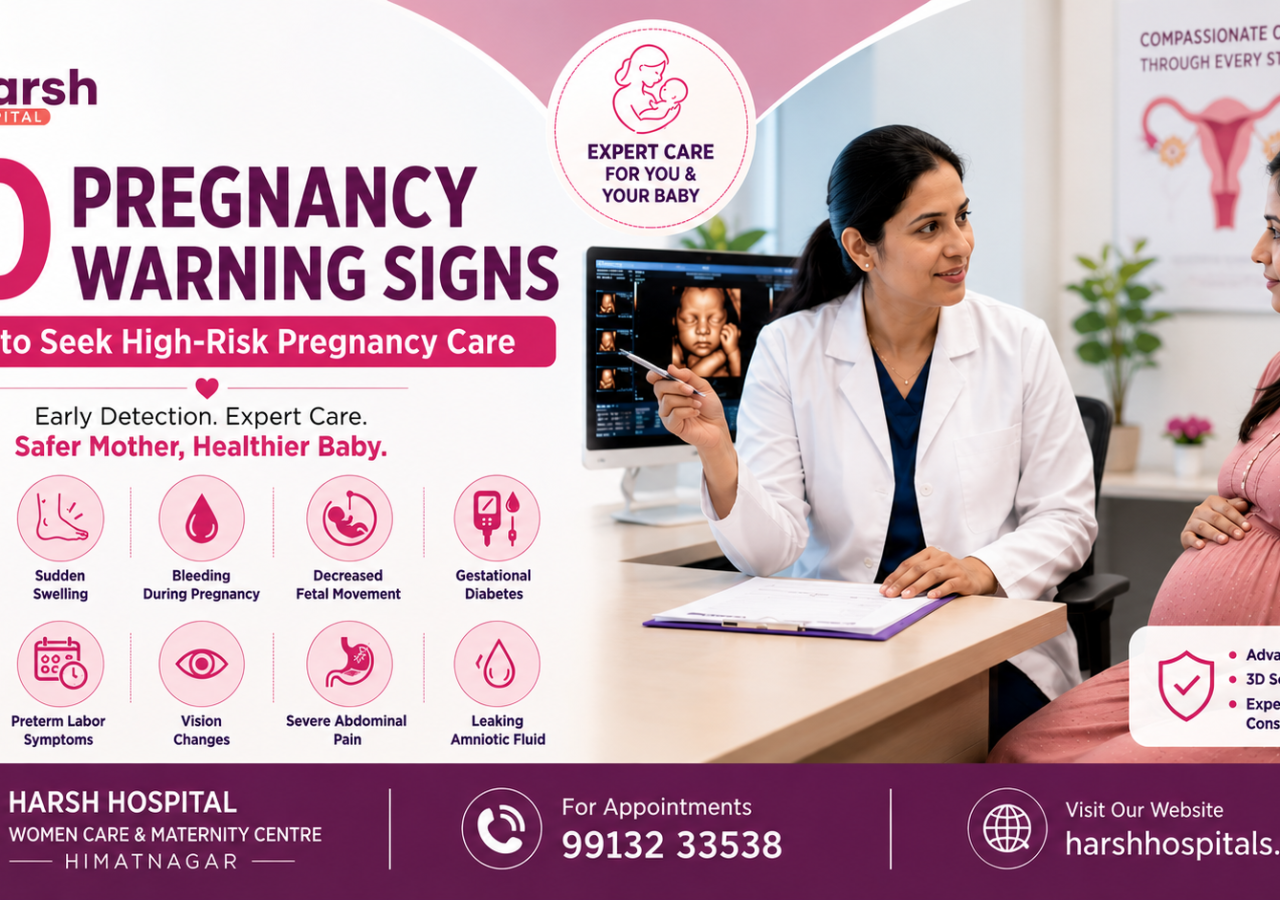
In this article, we walk you through 10 serious pregnancy warning signs and explain exactly how dedicated high risk pregnancy care addresses each one.
What Is High Risk Pregnancy Care?
Before diving into the warning signs, it is important to understand what high risk pregnancy care actually means.
A pregnancy is considered high risk when factors exist that increase the likelihood of complications for the mother, the baby, or both. These factors can be medical (such as diabetes, hypertension, or thyroid disorders), age-related (teen pregnancies or pregnancies after 35), or related to the pregnancy itself (multiple pregnancies, abnormal placentation, or fetal growth problems).
High risk pregnancy care is a structured, multidisciplinary approach to managing these pregnancies with greater vigilance. It typically involves:
- More frequent antenatal check-ups and monitoring
- Advanced imaging such as 3D sonography in pregnancy
- Specialised pregnancy consultation services and second opinions
- Customised delivery planning, including access to painless delivery options or planned caesarean sections
- A coordinated team that responds quickly to changing clinical situations
The aim is not to alarm the mother but to ensure that every possible complication is anticipated and addressed before it becomes a crisis.
Who Needs High Risk Pregnancy Care?
Not every pregnancy will require specialised intervention, but some women are at higher risk from the outset. You may need high risk pregnancy care if you:
- Are pregnant with twins or multiples
- Have a history of miscarriage or premature birth
- Are aged 35 or older (advanced maternal age)
- Are living with diabetes, hypertension, thyroid disorders, or heart conditions
- Have previously undergone gynaecological surgery
- Have been diagnosed with PCOS — a condition the team at Harsh Hospital manages through dedicated PCOS/PCOD treatment
- Have experienced difficulties conceiving, assessed through infertility evaluation
Even women with no prior complications can develop warning signs during pregnancy. That is why knowing what to look for matters enormously.
10 Serious Pregnancy Warning Signs — and How High Risk Pregnancy Care Helps
-
Severe or Persistent Headaches
Occasional mild headaches are common during pregnancy due to hormonal changes. However, severe, persistent, or sudden headaches especially in the second or third trimester — can be an early indicator of preeclampsia, a potentially life-threatening condition involving high blood pressure and organ stress.
How high risk pregnancy care helps: Regular blood pressure monitoring during every antenatal visit is fundamental. When preeclampsia risk is identified, physicians can introduce early interventions such as low-dose aspirin, dietary modifications, and closer fetal surveillance to protect both mother and child.
-
Sudden or Excessive Swelling
Mild swelling of the feet and ankles is expected in pregnancy. But sudden puffiness of the face, hands, and feet — particularly when accompanied by headaches or blurred vision — signals a red flag for preeclampsia or dangerous fluid retention.
How high risk pregnancy care helps: Urine protein testing, blood pressure assessment, and blood work are performed routinely. If abnormalities are found, a management plan is initiated immediately and delivery may be planned earlier to avoid escalation.
-
Bleeding During Pregnancy
Any vaginal bleeding during pregnancy warrants urgent medical attention. In early pregnancy, it may indicate miscarriage or ectopic pregnancy. In the later stages, it can signal placenta previa (a low-lying placenta) or placental abruption, both of which are obstetric emergencies.
How high risk pregnancy care helps: 3D sonography in pregnancy plays a critical role here. Advanced ultrasound imaging allows doctors to precisely locate the placenta, assess its attachment, and evaluate fetal wellbeing. This technology provides far greater detail than standard 2D imaging and enables faster, more accurate decision-making.
-
Decreased or Absent Fetal Movement
From around 18–20 weeks of pregnancy, mothers begin to feel their baby move. A noticeable decrease in fetal movements — especially after 28 weeks — is a warning sign that should never be ignored. It may suggest fetal distress or umbilical cord complications.
How high risk pregnancy care helps: Non-stress testing (NST) and biophysical profiling are used to assess fetal activity and wellbeing. Doppler ultrasound, often done as part of 3D sonography in pregnancy assessments, helps evaluate blood flow through the umbilical cord and placenta. If fetal compromise is detected, the team can act swiftly.
-
Signs of Gestational Diabetes
Gestational diabetes — high blood sugar that develops during pregnancy — affects a growing number of women, particularly those with a family history of diabetes or those who are overweight. Left unmanaged, it increases risks of complications for both mother and baby, including premature birth, large birth weight, and the baby developing breathing problems.
How high risk pregnancy care helps: Glucose tolerance testing is a standard part of antenatal screening. When gestational diabetes is detected, personalised dietary plans, blood sugar monitoring, and medication (if required) are initiated. Women with gestational diabetes benefit greatly from dedicated pregnancy consultation services that guide them through every stage.
-
Preterm Labour Symptoms
Contractions before 37 weeks of pregnancy, pelvic pressure, low back pain, or a change in vaginal discharge may indicate preterm labour — one of the leading causes of neonatal complications.
How high risk pregnancy care helps: Women identified as being at risk of premature birth are monitored more frequently. Cervical length measurements using transvaginal ultrasound help predict the likelihood of preterm birth. In appropriate cases, progesterone supplementation or cervical cerclage procedures can extend the pregnancy significantly.
-
Severe Abdominal Pain or Cramping
While round ligament pain is normal in pregnancy, severe or persistent abdominal cramping — particularly if accompanied by spotting, fever, or nausea — can indicate placental abruption, appendicitis, or other serious conditions.
How high risk pregnancy care helps: Prompt clinical evaluation, blood tests, and urgent ultrasound imaging allow the medical team to differentiate between benign discomfort and life-threatening emergencies. Speed of diagnosis is a cornerstone of quality high risk pregnancy care, and having access to in-house advanced imaging is invaluable.
-
Vision Disturbances or Sudden Blurry Vision
Sudden blurred vision, seeing flashing lights, or temporary loss of vision during pregnancy should never be dismissed. These symptoms often accompany severe preeclampsia or HELLP syndrome (a serious variant involving liver enzymes and platelet counts).
How high risk pregnancy care helps: Blood tests, urine analysis, and urgent medical review are conducted without delay. Hospitalisation may be recommended for close monitoring. Delivering the baby is often the definitive treatment for severe preeclampsia, and the team works together to time this appropriately.
-
High Fever or Chills
A fever above 38°C during pregnancy is a cause for concern. Infections such as urinary tract infections, listeriosis, or chorioamnionitis (infection of the amniotic membranes) can rapidly escalate and harm the fetus.
How high risk pregnancy care helps: Regular urine cultures and blood tests help screen for underlying infections. If a fever develops, rapid assessment and appropriate antibiotic treatment are initiated. The focus is always on protecting fetal wellbeing while resolving the underlying cause.
-
Rapid or Unexplained Weight Gain
Weight gain is expected during pregnancy, but rapid unexplained weight gain — particularly in the second or third trimester — can indicate fluid retention associated with preeclampsia or gestational hypertension.
How high risk pregnancy care helps: Weight is carefully tracked at every antenatal visit. Any unusual pattern triggers a deeper review including blood pressure measurement, urine testing, and blood work. Early detection through consistent monitoring prevents minor concerns from becoming serious emergencies.
Why 3D Sonography in Pregnancy Is a Game-Changer
One of the most powerful tools in modern high risk pregnancy care is 3D sonography in pregnancy. Unlike conventional 2D ultrasound, 3D technology provides three-dimensional reconstructed images of the baby, the placenta, and surrounding structures — delivering levels of detail that were simply not possible before.
3D sonography in pregnancy is particularly valuable for:
- Detecting structural fetal abnormalities (heart, spine, brain, face)
- Precise placental localisation and assessment
- Evaluating amniotic fluid volumes
- Confirming fetal position and presentation in late pregnancy
- Providing parents with an emotionally meaningful view of their baby
When warning signs are present, 3D sonography in pregnancy helps the medical team act with both speed and precision. At Harsh Hospital, this technology is integrated into routine high-risk obstetric care so that every concern can be addressed with the best available evidence.
The Role of Pregnancy Consultation Services
Accessing quality pregnancy consultation services early — ideally before conception or in the first trimester — sets the foundation for a well-managed pregnancy. Pregnancy consultation services help identify risk factors in advance, establish a monitoring plan, and ensure the mother feels informed and supported every step of the way.
At Harsh Hospital, pregnancy consultation services are designed to be accessible and thorough. Whether you are planning a pregnancy and have pre-existing conditions, or whether you have received a worrying test result, a consultation with Dr. Hitesh Patel provides personalised guidance without clinical jargon.
You can explore normal pregnancy care and high-risk pregnancy management options through the hospital’s dedicated treatment pages and book an appointment conveniently online or by phone.
How Harsh Hospital Supports High Risk Pregnancies
Harsh Hospital in Gujarat has built a strong reputation for managing complex obstetric cases across more than 25 years of practice. With over 25,000 safe deliveries and a patient-first philosophy, the hospital offers:
- Dedicated high risk pregnancy care protocols developed by Dr. Hitesh Patel
- On-site 3D sonography in pregnancy for detailed fetal and placental assessment
- Comprehensive pregnancy consultation services available six days a week
- Access to painless delivery and planned caesarean section options
- Same-day appointments for urgent concerns
- A compassionate, unhurried environment where mothers feel heard
The hospital’s approach to high risk pregnancy care is built on one belief: every mother deserves the best possible chance at a safe delivery and a healthy baby.
Conclusion
Pregnancy should be a time of joy and anticipation, not anxiety. But for women who face complications or experience warning signs, having access to expert high risk pregnancy care transforms a potentially frightening experience into a manageable one.
By recognising the 10 warning signs discussed in this article and seeking timely medical support, pregnant women can significantly reduce the risk of serious outcomes. Advanced tools like 3D sonography in pregnancy and personalised pregnancy consultation services mean that no concern is too small — and no complication goes undetected.
If you or someone you know is experiencing any of these warning signs, or if you simply want to ensure your pregnancy receives the specialist attention it deserves, reach out to Harsh Hospital today. Dr. Hitesh Patel and his team are ready to support you every step of the way.
Frequently Asked Questions (FAQs)
What makes a pregnancy high risk?
A pregnancy is classified as high risk when conditions exist that increase the chance of complications for the mother, baby, or both. These include pre-existing illnesses such as diabetes and hypertension, a history of pregnancy complications, advanced maternal age (35 or older), multiple pregnancies, or fetal abnormalities detected during screening. Accessing high risk pregnancy care early in such cases is essential.
When should I seek high risk pregnancy care?
You should consult a specialist for high risk pregnancy care as early as possible — ideally in the first trimester or even before conception if you have a known medical condition. If warning signs such as bleeding, severe headaches, decreased fetal movement, or swelling develop at any stage, seek medical attention immediately.
How is 3D sonography in pregnancy different from a regular ultrasound?
Standard 2D ultrasound provides flat, cross-sectional images of the baby. 3D sonography in pregnancy creates three-dimensional images that give far more detail about the baby’s anatomy, the placenta, and surrounding structures. It is particularly valuable in high risk pregnancy care for detecting structural abnormalities and assessing placental health with greater accuracy.
Is 3D sonography in pregnancy safe?
Yes. 3D sonography in pregnancy uses the same basic ultrasound technology as conventional scans — it does not use radiation. The procedure is non-invasive, painless, and considered safe at all stages of pregnancy when conducted by a qualified professional.
What pregnancy consultation services are available at Harsh Hospital?
Harsh Hospital offers a full range of pregnancy consultation services, including preconception counselling, first trimester risk assessment, anomaly scanning, gestational diabetes management, blood pressure monitoring, fetal growth assessment, and delivery planning. These services are available for both normal pregnancies and high-risk pregnancies.
Can I have a normal delivery even if my pregnancy is high risk?
In many cases, yes. The goal of high risk pregnancy care is to optimise conditions so that vaginal delivery remains possible wherever it is safe to do so. However, some high-risk situations necessitate a planned caesarean section for the safety of both mother and baby. The delivery approach is always discussed thoroughly with the patient in advance.
How do I book a high risk pregnancy consultation at Harsh Hospital?
You can book a consultation by visiting harshhospitals.com/appointment, calling 99132 33538, or sending a WhatsApp message. The hospital is located near Mehta Petrol Pump, Himatnagar, Gujarat.