
June 11, 2026 · Pregnancy
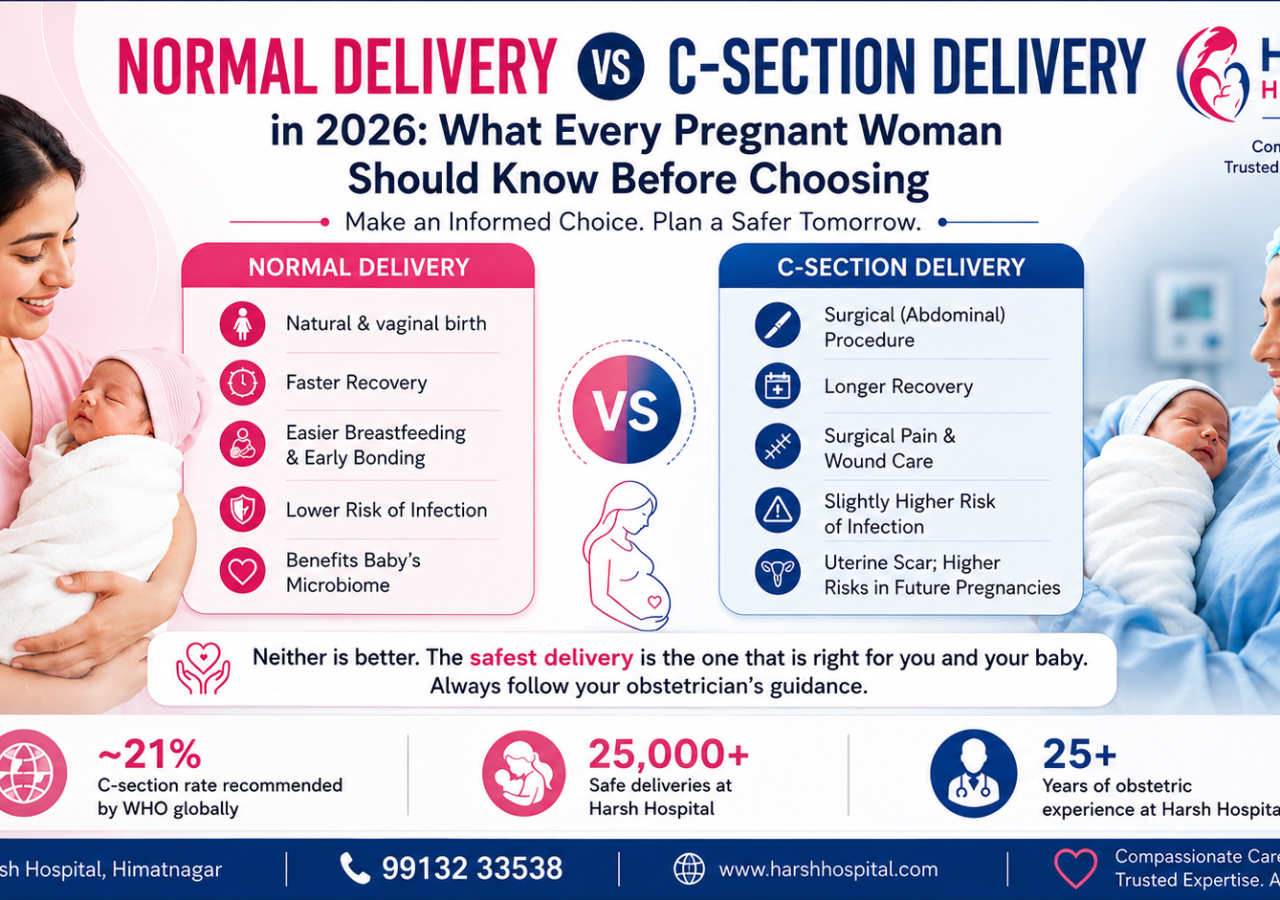
| ~21% | 40%+ | 25,000+ | 25+ |
| C-section rate recommended by WHO globally | India’s urban C-section rate in private hospitals | Safe deliveries at Harsh Hospital | Years of obstetric experience at Harsh Hospital |
Introduction
One of the most important conversations a pregnant woman has with her doctor is about how her baby will be born. The question of normal delivery vs C-section delivery is not new — but in 2026, with more patient-centred care and better access to medical information, women are rightly asking deeper questions and expecting honest, clear answers.
Whether you are expecting your first child or planning a subsequent pregnancy, understanding the real differences, risks, benefits, and long-term implications of normal delivery vs C-section delivery empowers you to actively participate in your birth plan — rather than simply being handed a decision.
This guide, prepared by the specialist team at Harsh Hospital, Himatnagar, breaks down the normal delivery vs C-section delivery question in plain, straightforward language. By the time you finish reading, you will know what each option truly involves, when one is medically preferred over the other, and how to have a productive, informed conversation with your obstetrician.
What Is a Normal Delivery?
A normal delivery — also called a vaginal delivery — is the natural process by which a baby passes through the birth canal. Before exploring the full normal delivery vs C-section delivery comparison, it helps to understand each option clearly on its own terms. A normal delivery can occur spontaneously or be supported with medication to induce labour. It may be completely unmedicated or assisted with epidural analgesia for pain relief. For most healthy pregnancies without complications, a normal delivery is the first-choice recommendation of obstetricians both in India and globally.
A normal delivery generally involves three stages: the cervix dilating and thinning, active pushing as the baby moves through the birth canal, and the delivery of the placenta. Recovery is typically faster than after surgery, and most mothers can walk within a few hours of birth. When it comes to normal delivery vs C-section delivery, the recovery gap alone is a significant practical consideration for many families.
What Is a C-Section Delivery?
A C-section delivery — or Caesarean section — is a surgical procedure in which a baby is delivered through incisions made in the mother’s abdomen and uterus. When evaluating normal delivery vs C-section delivery, it is essential to understand that a C-section is both a major abdominal surgery and a genuinely life-saving procedure when performed for the right medical reasons.
C-sections can be planned (elective) or emergency. The dedicated caesarean section team at Harsh Hospital is equipped for both, ensuring round-the-clock surgical readiness and full neonatal support. The key word in the normal delivery vs C-section delivery conversation is always indication — the medical reason that makes one option safer than the other for a specific pregnancy.
Normal Delivery vs C-Section Delivery: A Side-by-Side Comparison
The table below gives a clear, evidence-based snapshot of how normal delivery vs C-section delivery differ across the most important parameters every mother should understand.
| Parameter | Normal Delivery | C-Section Delivery |
| Type of procedure | Natural / vaginal | Surgical (abdominal) |
| Anaesthesia | None, or epidural for pain | Spinal / epidural block |
| Duration | Hours (variable) | ~45–60 minutes (surgery) |
| Hospital stay | 1–2 days | 3–5 days |
| Home recovery | 2–4 weeks | 6–8 weeks |
| Post-delivery pain | Mild to moderate | Moderate to severe (surgical) |
| Breastfeeding initiation | Immediate / easier | Slight delay possible |
| Risk of infection | Low | Slightly higher (surgical site) |
| Impact on future pregnancies | No major restrictions | Uterine scar; higher risks in future births |
| Baby microbiome benefits | Yes — vaginal microbiome exposure | May miss this benefit |
| Typical cost (India) | Lower overall | Higher (surgical, longer stay) |
| Ideal for | Low-risk, uncomplicated pregnancies | Medical necessity / high-risk situations |
The honest answer to normal delivery vs C-section delivery is that neither method is universally better. The safest delivery is always the one that is most appropriate for your specific clinical situation. A qualified obstetrician considers your full health profile before making any recommendation.
Recovery: What to Realistically Expect
Recovery is one of the most practical aspects of the normal delivery vs C-section delivery decision — and the differences are significant, extending well beyond the first few days after birth.
After a Normal Delivery:
- Walking is usually possible within hours of birth
- Light activity can typically resume within one to two weeks
- Perineal soreness is common but manageable with appropriate care
- Breastfeeding is generally easier to establish early
- Emotional bonding hormones are released rapidly after birth
- Return to full daily routine: two to four weeks
After a C-Section Delivery:
- Bed rest is required for at least 24 hours post-surgery
- Wound care and dressing changes are necessary for several days
- No strenuous lifting for six to eight weeks
- Driving is restricted for four to six weeks
- Scar tissue can cause long-term discomfort in some women
- Return to full activity: eight to twelve weeks
This recovery comparison is one of the clearest ways to frame normal delivery vs C-section delivery for women whose pregnancies allow either option. The longer recovery associated with a C-section affects the mother’s ability to care for her newborn independently, return to work, and manage daily responsibilities — factors that matter deeply to most families planning for life after birth.
One important long-term consideration in the normal delivery vs C-section delivery discussion is the cumulative impact on future pregnancies. Women who have had one C-section face a higher risk of placenta praevia, uterine rupture, and the need for a repeat C-section in subsequent births. If you are planning a large family, this is a vital point to raise with your specialist early in your pregnancy.
When Is a C-Section Delivery Medically Necessary?
There are clear, evidence-based medical indications for a C-section. In these situations, the comparison of normal delivery vs C-section delivery becomes straightforward — the C-section is simply the safer option for the mother, the baby, or both.
| Medical Indication | Explanation | Urgency |
| Foetal distress | Baby’s heart rate signals inadequate oxygen supply | Emergency |
| Placenta praevia | Placenta blocks the cervical opening | Planned |
| Umbilical cord prolapse | Cord drops below the baby, cutting off oxygen | Emergency |
| Breech or transverse position | Baby not positioned head-down near term | Planned |
| Failed labour progress | Cervix not dilating after prolonged active labour | Urgent |
| Previous uterine surgery | Prior C-section with compromised uterine scar | Planned |
| Pre-eclampsia / eclampsia | Dangerously elevated maternal blood pressure | Emergency |
| Multiple pregnancies | Twin or triplet positioning complications | Planned |
Women experiencing any of these high-risk pregnancy conditions should be under specialist monitoring from the early second trimester. If you fall into any of these categories, exploring high-risk pregnancy care at Harsh Hospital is strongly recommended, as the normal delivery vs C-section delivery decision for your specific case will be shaped significantly by how your pregnancy progresses.
Important: Requesting a C-section purely for scheduling convenience — without medical justification — carries real risks. Understanding normal delivery vs C-section delivery accurately means recognising that WHO guidelines recommend C-sections only when medically necessary. If fear of labour pain is your concern, discuss painless delivery options with your doctor before defaulting to surgery.
How to Choose What Is Right for You
There is no universal answer to normal delivery vs C-section delivery that applies to every woman. The right choice emerges from a careful, personalised assessment of your health, your baby’s condition, and the specific progress of your pregnancy. Here is a structured framework to guide your conversation with your obstetrician.
| Factor to Discuss | Favours Normal Delivery | Favours C-Section Delivery |
| Baby’s position at 36 weeks | Head-down (cephalic) | Breech or transverse |
| Placenta location | Fundal, clear of cervix | Low-lying or placenta praevia |
| Maternal pelvis | Adequate pelvic measurements | Cephalopelvic disproportion |
| Maternal health conditions | No significant comorbidities | Severe cardiac disease, active herpes, etc. |
| Previous deliveries | Previous normal deliveries | Previous C-section (case by case) |
| Baby’s size | Average or smaller for gestational age | Macrosomia (unusually large baby) |
| Labour progress | Active, well-progressing labour | Arrest of labour or foetal distress |
In any discussion of normal delivery vs C-section delivery, regular antenatal care is the single most effective way to ensure a well-informed, personalised decision. Normal pregnancy care at Harsh Hospital tracks every one of these parameters through each trimester, so there are no surprises when labour begins.
Practical tip: Write down your questions before each antenatal visit. Ask your doctor directly: “Why do you recommend this delivery mode for me specifically?” A good obstetrician will always explain their reasoning clearly and without rushing you.
Why Your Choice of Maternity Hospital Matters
Many pregnant women focus entirely on normal delivery vs C-section delivery as a binary choice while significantly underestimating how much the quality of their maternity hospital shapes the actual outcome. No matter which side of the normal delivery vs C-section delivery equation applies to you, the staff, equipment, protocols, and culture of your maternity unit affect everything from labour support to emergency readiness.
When evaluating a hospital for your delivery — whether you are leaning toward a normal delivery or a C-section — look for these key factors:
- Round-the-clock obstetric cover: Labour rarely follows a schedule. A maternity unit with 24/7 specialist availability is non-negotiable, regardless of which side of the normal delivery vs C-section delivery debate applies to you.
- Emergency surgical capability: Even a planned normal delivery can rapidly require an emergency C-section. Your hospital must have a fully equipped operating theatre and anaesthesia team on standby at all times.
- Neonatal support: A neonatal resuscitation facility ensures your baby receives immediate specialist care if required after birth.
- Experienced, compassionate nursing staff: Skilled labour support significantly improves both outcomes and the overall birth experience.
- Clear, honest communication: You should never feel rushed or uninformed about any decision related to your birth plan — whether it relates to normal delivery vs C-section delivery, pain management, or postnatal care.
- Postnatal care continuity: A good maternity hospital supports you through breastfeeding, newborn care education, and follow-up appointments before discharge.
At Harsh Hospital in Himatnagar, over 15,000 safe deliveries have been completed across two decades of practice. Whether you need a painless vaginal birth, a planned Caesarean, or expert management of a complex pregnancy, every service is available in one place — without referral delays or gaps in continuity of care.
Conclusion
The question of normal delivery vs C-section delivery deserves a thoughtful, medically grounded, and personalised answer — not a generalised opinion or a decision made out of fear. Both options have a rightful place in modern obstetric care. The goal is always the same: a safe outcome for both mother and baby.
Understanding the key differences in recovery, long-term implications, medical indications, and situational suitability gives you the foundation to have a confident, productive conversation with your obstetrician. No matter which path is right for your pregnancy, the most important step is engaging with a specialist team you trust — one that listens to your concerns, explains the reasoning behind every recommendation, and prepares you fully for what lies ahead.
If you would like to discuss your birth plan, ask questions about normal delivery vs C-section delivery in the context of your own health, or book a consultation with Dr. Hitesh Patel, same-day appointments are available at Harsh Hospital. The team is ready to support you at every stage of your pregnancy journey.
Frequently Asked Questions
- Is normal delivery safer than C-section delivery? For uncomplicated pregnancies, a normal delivery is generally considered safer because it avoids the risks associated with major surgery — including infection, longer recovery, and anaesthesia complications. However, when medical indications exist such as foetal distress or placenta praevia, a C-section becomes the safer choice. In any normal delivery vs C-section delivery comparison, “safer” always depends on the specific clinical circumstances rather than the method itself.
- Can I request a C-section without a medical reason? While patient autonomy is respected, most responsible obstetricians will counsel strongly against an elective C-section without medical indication. When considering normal delivery vs C-section delivery, it is important to remember that a C-section is major surgery with real risks, including a longer recovery and complications in future pregnancies. If fear of labour pain is driving this preference, options such as painless delivery with epidural support are an excellent, evidence-based alternative worth exploring first.
- Can I have a normal delivery after a previous C-section? Yes, in many cases. This is known as VBAC — Vaginal Birth After Caesarean. Whether VBAC is appropriate depends on the type of uterine incision from your previous C-section, your current pregnancy’s progress, and the facilities at your maternity hospital. When discussing normal delivery vs C-section delivery for a second or third pregnancy, always raise this with your obstetrician from early in the first trimester.
- Does a C-section delivery affect breastfeeding? Breastfeeding outcomes are an important consideration in the normal delivery vs C-section delivery conversation. A C-section does not prevent breastfeeding, but it can cause a slight delay in milk coming in. With proper lactation support from trained nursing staff — which every quality maternity hospital should provide — most mothers who deliver by C-section breastfeed successfully. Early skin-to-skin contact, even in the recovery room, is actively encouraged to stimulate milk production.
- How long does recovery from a C-section delivery take? Recovery duration is one of the most tangible differences in the normal delivery vs C-section delivery comparison. Initial recovery in hospital typically takes three to five days. At home, heavy lifting, driving, and strenuous activity should be avoided for six to eight weeks. Full internal healing of the uterine scar may take several months. Proper wound care, nutritional support, and follow-up appointments are essential components of a smooth recovery.
- Is normal delivery more painful than a C-section? This is a common misconception in the normal delivery vs C-section delivery debate. Labour pain can be very effectively managed, including with epidural analgesia, making normal delivery far more comfortable than many women expect. C-section, on the other hand, involves significant post-surgical pain lasting several days to weeks. Many women find that recovery from a C-section is the more challenging overall experience.
- How many C-sections can a woman safely have? Most obstetricians recommend a maximum of three C-sections, though this varies based on individual circumstances. Each subsequent C-section carries increasing risks including uterine scar complications and abnormal placentation. If you are planning a large family, this is one of the most important long-term factors in the normal delivery vs C-section delivery conversation for your current pregnancy, and it should be discussed openly with your specialist from the outset.
Leave a Reply